
The right lamb order starts with guest count and serving style, not the largest available size. First decide whether lamb is the centerpiece or one of several dishes. Then choose between a meat box, half carcass, or whole carcass, followed by lamb type and cutting instructions. No fixed guest number applies to every carcass because the actual product, menu, platter distribution, and preparation all change the quantity required.
Quick answer: Use this order: guest count → serving style → order format → lamb type → cutting → collection or delivery time. The best lamb for a gathering is the option closest to the event’s actual needs, not automatically the biggest.
What should you ask before buying lamb for a gathering?
Before comparing Hari, Naimi, and Sawakni, define the gathering itself. These questions help prevent an oversized order or a cutting format that does not fit the meal.
How many guests are realistically expected?
Do not rely only on the number of invitations. Use the most realistic attendance estimate, then consider the menu and serving format. Guest count is the starting point, not the complete calculation. A lamb-centered meal is different from a table with several main courses.
How will the meat be served?
Decide whether it will be served over kabsa or mandi, distributed over several platters, or offered alongside other mains. Consider piece size, presentation, and whether you intentionally want leftovers for a planned use. These details can change the appropriate order format.
What type of occasion is it?
A small family lunch is different from a formal occasion or large feast. A half carcass or meat box may be more practical for a smaller event. A larger gathering may justify comparing whole-carcass products and platter distribution, but not automatically choosing the largest item.
Do you really need a whole carcass?
Begin with the order format: meat box, half carcass, or whole carcass. If lamb is one of several mains, a smaller format may be closer to actual use. If lamb is the centerpiece and you need different cuts across several platters, a whole carcass may make more sense.
What cutting instructions do you need?
Treat cutting as part of the buying decision. Meat for kabsa may be portioned differently from meat for grilling, casseroles, or several future uses. The clearer the dish, the more useful your preparation request becomes.
Pre-order checklist
- Realistic attendance estimate.
- Type and scale of gathering.
- Whether lamb is the centerpiece or one option.
- Other main and side dishes.
- Meat box, half carcass, or whole carcass.
- Preferred lamb type.
- Dish and cooking method.
- Cutting and portioning requirements.
- Confirmed collection or delivery time.
- A clear plan for any leftovers.
How do you choose lamb size by guest count?
There is no universal answer to “How many people does one lamb feed?” The result changes with product size, what the stated weight includes, cutting, rice and side dishes, and how meat is distributed across platters. Use guest count as a planning signal, not a guaranteed formula.
| Gathering situation | What matters most | Practical starting point |
| Smaller group | Several other dishes are available | Compare half-carcass and meat-box options first |
| Family gathering | Lamb is a main dish with rice and sides | Compare a larger half with a smaller whole product using live details |
| Larger gathering | Lamb is central and spread across platters | Compare whole-carcass products and published sizes |
| Large feast | Presentation and serving flexibility matter | Request a documented store recommendation after sharing event details |
If you need a specific product-to-guest estimate, it should come from documented Hummmy Yummmy operating data that defines the product and serving assumptions. Until then, do not present a general number as a guarantee.
When should you consider half a lamb?
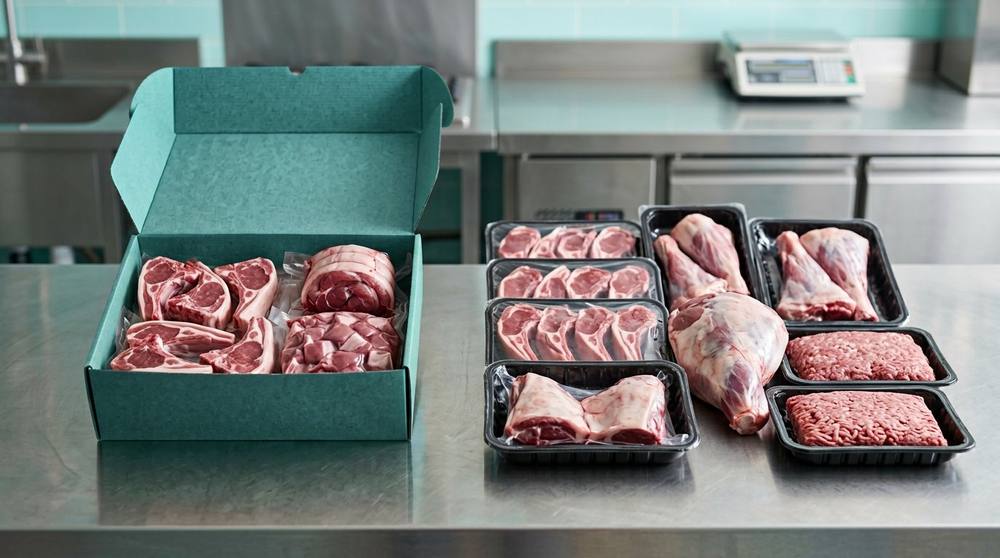
A half carcass can be practical when the gathering is smaller, several other mains are served, or you do not want a large amount left over. It can also provide a range of cuts without moving directly to a whole carcass. Review the published contents rather than assuming what a half order includes or how many guests it serves.
The store lists the Super Hari Box as an option containing half a carcass according to its product page. Check current contents, weight, and availability at the time of ordering.
Consider a half carcass when:
- The expected group is relatively small.
- Several main dishes will be served.
- You want a manageable amount to divide and use.
- You have no plan for storing a large remainder.
- You want to compare a lamb type before ordering a whole carcass.
When should you consider a whole lamb?
A whole carcass may fit when lamb is the centerpiece, several platters need different cuts, or every part of the order has a planned use. Do not rely only on “small,” “medium,” or “large.” Open the product page and read the current weight range, included parts, and preparation details.
Start with the whole carcass category, then compare live products rather than making a decision from the size label alone.
How should you compare Hari, Naimi, and Sawakni?
Replace “Which is best?” with “Which fits the guests’ preference, dish, required size, and available preparation?” There is no universal winner; the decision combines preference with the actual product.
When should you choose Hari?
Hummmy Yummmy publishes Hari in multiple sizes, making it possible to compare within the same type. Review the small whole Hari, medium Hari carcass, or large whole Hari. Use current page data instead of copying an older range from another article.
When should you choose Naimi?
Choose Naimi when it matches household preference and the available product fits the event and cutting plan. The store lists options such as small Naimi, medium Naimi, and large Naimi.
When should you choose Sawakni?
Sawakni is another option to compare by event and available product. The store lists a small Sawakni, medium Sawakni, and large Sawakni. Review the live description before deciding.
Quick comparison of lamb types
| Type | How to use it in the decision | What to review |
| Hari | Compare available Hari sizes with the event format | Current weight, included parts, and cutting |
| Naimi | Choose it when preference matches an available size | Product page and preparation options |
| Sawakni | Compare it by dish, occasion, and availability | Actual size, cutting, and current stock |
The lamb type does not settle the decision alone. The right product combines preference, size, and preparation that fit the gathering.
How should the occasion guide the order?
| Occasion | Buying approach |
| Small family gathering | Compare half-carcass and meat-box options before whole lamb |
| Larger family gathering | Confirm attendance and serving style, then compare whole sizes |
| Formal occasion | Finalize cutting, platter distribution, and preparation time early |
| Kabsa or mandi | Decide piece size and number of serving platters before quantity |
| Barbecue | Buy the cuts you will actually grill instead of defaulting to a whole carcass |
| Multi-course table | Remember that lamb is not the only main option |
What should you check before confirming the order?
When buying a prepared carcass, focus on product-level details rather than the lamb name alone. Review the published approximate weight and what it includes, then read the cutting, preparation, and packaging options. Ask for clarification when a detail affects the decision but is not clear.
- What weight range is currently published?
- Which parts are included?
- Is the weight stated before or after cleaning?
- Which cutting options are available?
- How is the order divided and packed?
- Can preparation notes be added?
- What collection or delivery time is confirmed?
What storage directions are published on the product or by the competent authority?
How should platter planning affect the order?
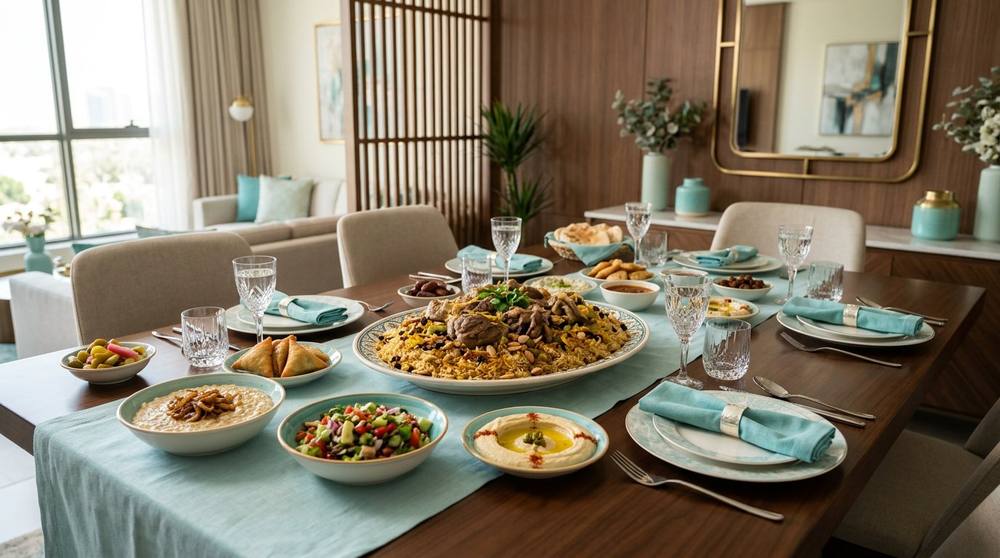
Guest count does not show how lamb will be distributed. Before confirming the order, sketch the table: how many main platters will carry lamb, whether guests are seated in one group or several, and whether each platter needs larger presentation pieces or smaller portions over rice. This makes the quantity and cutting discussion more specific without turning attendance into a fixed formula.
If the event uses several rooms or tables, ask whether the order can be divided in a way that makes even distribution easier. Add the number and purpose of the serving platters to your preparation notes when the store’s options allow it.
What information helps the store recommend more accurately?
Instead of asking only “What is the best lamb?”, send the realistic attendance estimate, main dish, other mains, number of serving platters, preferred lamb type, and event date. Ask for written clarification of any detail that affects your choice, including what the published weight means, included parts, and cutting options. Do not transfer a recommendation for one product to another, because size, contents, and preparation may differ.
What mistakes should you avoid?
Choosing the largest size “just in case”
A larger size is not automatically safer. Increase quantity only for a clear reason related to attendance, serving, or a planned use for the remainder.
Counting guests but ignoring the menu
The same number may need a different order when lamb is the only main compared with a multi-course table. Always connect attendance with serving style.
Choosing the lamb type before the dish
Preference matters, but the dish and cutting format may make one product more practical. Define the recipe, then type and size.
Comparing weight without reading the description
Weight can be approximate, and included parts may differ. Read each product description rather than comparing one number in isolation.
Leaving cutting until the last minute
Cutting affects cooking, platter distribution, and presentation. Confirm it before preparation begins.
Planning collection or delivery too late
Set timing around the cooking plan and available storage. Do not rely on an unpublished or unconfirmed promise.
How do you prepare the order step by step?
- Confirm attendance: use the most realistic estimate.
- Define the role of lamb: centerpiece or one of several mains?
- Choose the order format: box, half carcass, or whole.
- Choose the type: compare Hari, Naimi, and Sawakni by preference and availability.
- Specify cutting: match the dish and platter plan.
- Review the product page: read the approximate weight and included parts instead of relying on the size name.
- Confirm timing: get a collection or delivery time that fits event preparation.
Frequently asked questions
How many people does a Hari lamb serve?
There is no fixed number because Hari products differ in size and preparation, while menus and serving styles also vary. Choose the actual product first, then request a documented estimate for your event details.
When is half a lamb enough?
It may fit when attendance is limited, other main dishes are served, or you do not want a large remainder. Do not use a fixed guest number without the product and menu context.
Should I buy a whole or half lamb?
Start with a half or box for a limited requirement. Consider whole when lamb is the centerpiece or different cuts are needed across several platters.
Which is better for gatherings, Hari or Naimi?
Neither is right for every event. Compare preference, current size, cooking method, and cutting, then choose the product closest to the gathering.
Is Sawakni suitable for gatherings?
It can be considered according to the available product, dish, and cutting plan. Review the current product page before ordering.
The final rule before ordering
Guest count → serving style → order format → lamb type → cutting → collection or delivery time. Do not start with price or the largest size; start with what you will actually serve.
After defining your needs, review the currently available whole-lamb options at Hummmy Yummmy and compare the published size and preparation details.