
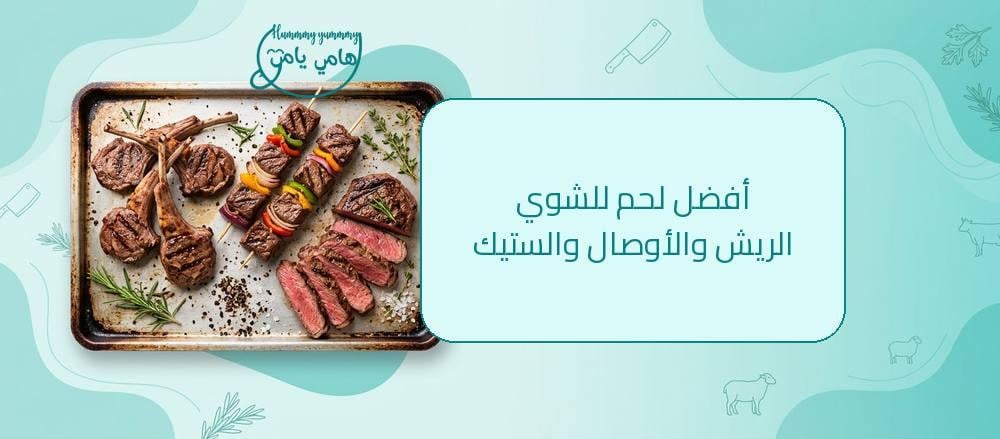
A successful barbecue can go wrong before the grill is even lit. Buying a cut that does not match your grill size, experience level, number of guests, or serving plan can make the cooking process unnecessarily difficult. A large tomahawk, for example, requires a different approach from small skewered meat pieces or individual lamb chops.
The best meat for grilling depends on your grill, experience level, cut size, and serving plan. Lamb chops and skewered meat can work well when you want smaller individual portions, while T-bone, tenderloin, and tomahawk steaks require more attention to thickness and heat management. Choose according to your situation rather than price or reputation alone.
The best grilling cut is the one that fits your grill, experience, and serving plan. Lamb chops and skewers work well for individual portions and faster service, while T-bone, tenderloin, and tomahawk need more attention to thickness, space, and heat control.
What Is the Best Meat for Grilling?
There is no single cut that deserves to be called the best meat for grilling in every situation.
Start with four factors: the cut itself, its thickness, its fat distribution, and your grilling experience.
If you are cooking for a group and need individual portions that can be served progressively, smaller cuts may make more sense than one very large steak. If you want a centerpiece that can be sliced and shared at the table, a larger steak may suit the occasion better.
Bone-in cuts also need to be considered differently when planning quantities. One kilogram of lamb chops or a large bone-in steak does not represent the same amount of edible meat as one kilogram of a boneless cut.
Thickness matters as well. A thick steak and a small piece of meat should not automatically be given the same cooking time simply because both are beef.
Your experience is the final part of the decision. Someone grilling for the first time may prefer cuts that reduce the number of variables they have to manage. A person already comfortable using a food thermometer and managing different heat zones has a wider range of options.
A practical definition of the best grilling cut is simple: it is the cut that fits your grill, serving plan, guest count, and cooking experience.
What Makes a Cut Suitable for Grilling?
Thickness
Pieces with relatively consistent dimensions are easier to manage as a group than a batch containing very thin and very thick pieces.
That does not mean thicker meat is worse. It means that thickness changes the cooking strategy.
A universal “X minutes per side” rule should therefore not be added to this guide without knowing the actual thickness, grill conditions, and target internal temperature.
Fat Within the Cut
Cuts differ in visible fat and internal fat distribution.
This article should not turn that observation into a blanket rule that “more fat is always better.” Technical comparisons should be based on the actual product being tested rather than an assumed fat percentage.
Bone-In vs. Boneless
Bone changes the shape, usable surface area, and portion calculation of a cut.
This matters when comparing lamb chops, T-bone, and tomahawk with boneless products.
Claims that bone automatically produces a specific tenderness, moisture, or flavour result should not be added without a controlled test or appropriate source.
Cut Size and Shape
Think about the grill before choosing the meat.
Several small skewers can be arranged very differently from a large tomahawk. The same is true when serving: individual chops are naturally portioned, while a large steak is often sliced and shared.
A useful serving framework is:
- Small pieces: quick portioning and skewers.
- Lamb chops: individual portions.
- Medium steaks: individual serving or slicing.
- Large steaks: centerpiece and shared serving.
Experience Level
The practical difficulty of a cut depends partly on the person using the grill.
A beginner may prefer to reduce variables by choosing relatively consistent pieces. An intermediate griller may be comfortable monitoring a steak with a thermometer. A more experienced griller may be prepared to manage larger cuts across multiple heat zones.
The objective is not to label one product “easy” forever. It is to match the product to the person using it.
Best Lamb Cuts for Grilling

When someone asks for the best part of lamb for grilling, the first decision should be how the meat will be served.
Do you want individual chops, skewers, or a mixed grill?
Lamb Chops
Lamb chops are an obvious option when you want separate pieces that can be distributed individually.
Review the product and its current details before ordering, especially size, thickness, and preparation.
They can make sense when:
- You want clearly separated portions.
- Your grill can accommodate several pieces without overcrowding.
- You want both lamb and another meat type in the same barbecue.
- You prefer serving pieces individually rather than carving a large steak.
They may be less suitable if you specifically want boneless meat or need to calculate portions using edible meat weight alone.
Whether the current chops should be classified as beginner-friendly cannot be confirmed until the actual thickness and grilling test are documented.
Skewered Meat and Kebab
Skewered meat serves a different purpose from lamb chops.
Smaller pieces can be arranged on skewers and served progressively, which may be useful for gatherings where food needs to reach guests in smaller portions.
It is also important not to confuse cubed meat with kofta. Kofta uses minced meat and has different handling and food-safety considerations.
Before publication, confirm:
Other lamb cuts should not be added to the “best for grilling” list simply because they are lamb. Their intended preparation and actual store specifications should first be confirmed.
| Lamb option | Serving format | What to confirm |
| Lamb chops | Individual pieces | Thickness, bone content, and grill space |
| Skewered meat | Skewers and small pieces | Meat type, marinade ingredients, and allergens |
| Other cuts | Depends on cut | Recommend only after preparation and cut details are confirmed |
What Is the Best Veal or Beef Cut for Grilling?
People searching for the best cut of veal or beef for grilling are often comparing steaks rather than simply choosing between beef and lamb.
T-bone, tenderloin, and tomahawk are not interchangeable products. Their size, shape, bone structure, and serving style differ.
T-Bone Steak
A T-bone is visually distinct because of the bone running through the steak.
Hummmy Yummmy’s local veal T-bone steak suits customers looking for a bone-in steak, with size, thickness, and product details checked at ordering.
It may fit a customer who specifically wants a bone-in steak and has enough grill space to handle it comfortably.
However, this article should not describe the T-bone as “the easiest steak” or rank its tenderness against other cuts without testing all of them under comparable conditions.
Tenderloin
Tenderloin provides a different shape and serving format from T-bone and tomahawk.
Hummmy Yummmy’s local veal tenderloin steak offers a different serving format, without using absolute claims unless supported by documented testing.
The article should avoid calling it “the softest cut” unless Hummmy Yummmy conducts a documented comparison or uses an appropriate technical source.
What matters to a buyer is what happened to the actual product on the grill.
The internal test should record:
- Thickness.
- Starting weight.
- Target internal temperature.
- Final weight.
- Handling difficulty.
- Serving format.
A customer mainly trying to feed a large number of people should also compare actual portion yield rather than selecting tenderloin because of the name alone.
Tomahawk Steak
Tomahawk is visually and physically different from the other options because of its long bone and large overall dimensions.
Review Hummmy Yummmy’s Black Angus tomahawk steak when you want a shared centerpiece and have suitable grill space, while checking current product details before ordering.
It is most relevant when the customer intentionally wants a large centerpiece that will later be sliced for sharing and has a grill large enough to accommodate it.
When Should You Avoid a Tomahawk?
It may be the wrong purchase if:
- Your grill is small.
- You have never handled a large, thick steak and do not have the tools to monitor it.
- You mainly need many small portions served quickly.
- You are buying it only because it looks more premium.
A higher price or more dramatic presentation does not automatically make it the most practical grilling choice.
Ribeye or Another Steak
Ribeye should only be added to the final comparison if the relevant product is available when the article is updated.
| Cut | Best use case | When not to choose it |
| T-bone | Bone-in steak for individual or sliced serving | When bone or cut size does not fit your plan |
| Tenderloin | Steak or organized sliced serving | When volume is the only goal |
| Tomahawk | Shared centerpiece | Small grill or limited large-cut experience |
Lamb Chops vs. Skewers vs. T-Bone vs. Tenderloin vs. Tomahawk
This comparison is not a ranking from best to worst. Its purpose is to show which product fits which situation.
| Cut | Serving style | Useful when | Watch for |
| Lamb chops | Individual | You want clear, easy-to-serve pieces | Weight includes bone |
| Skewers | Skewers | You want fast service and small pieces | Marinade ingredients and allergens |
| T-bone | Bone-in steak | You want a distinctive steak experience | Cut size and thickness |
| Tenderloin | Slices or steak | You want organized serving | Do not choose it only for volume |
| Tomahawk | Shared | You want a centerpiece and have suitable grill space | Space and experience |
Raw or Ready-Marinated Meat: Which Should You Buy?
Ready-marinated meat is not inherently better than raw meat, and raw meat is not automatically the better purchase.
The real question is how much preparation time and flavour control you want.
| Situation | Raw | Ready-marinated |
| You want full flavour control | Suitable | Less control |
| Preparation time is short | Requires preparation | More convenient |
| First time grilling | Depends on cut | Fewer preparation steps |
| Food allergy concern | You select ingredients | Full ingredient list must be checked |
| You want your own seasoning | Suitable | Usually less suitable |
| Large gathering | More advance preparation | Reduces prep work |
If convenience is the priority, consider ready-marinated grilling skewers. Before serving guests with allergies, review the current marinade ingredients and product label.
Before publishing allergy-related advice:
Choose raw meat when controlling the seasoning yourself is more important than reducing preparation time.
Which Cut Matches Your Grilling Experience?
Beginner
Reduce the number of variables you need to manage.
Consider:
- Relatively consistent small pieces.
- Ready-marinated skewers if the ingredients suit your needs.
- Lamb chops of similar thickness once their internal test has been completed.
The objective is not necessarily to buy the cheapest meat for practice. It is to select something you can confidently manage with your grill and tools.
Intermediate
At this level, a T-bone or another steak with clearly documented thickness becomes a more realistic option.
A food thermometer is more reliable for checking internal temperature than judging doneness from external appearance alone.
The Saudi Food and Drug Authority recommends using a thermometer to verify meat doneness and lists 63°C for steaks and whole cuts of beef, veal, and lamb.
Advanced
Larger or thicker steaks such as tomahawk become more practical when you are comfortable managing different heat zones and monitoring internal temperature.
That still does not mean an advanced griller should always choose the biggest steak. If the goal is serving many guests quickly, smaller portions may remain the more efficient choice.
How to Choose Meat According to Your Grill
Charcoal Grill
Instead of asking which cut is “best for charcoal,” ask whether your grill allows you to create and manage different heat areas.
The final cut recommendations should come from the documented Hummmy Yummmy grilling test rather than assumptions.
Gas Grill
Multiple burners may give the cook additional control over heat distribution, but grill dimensions and usable cooking area remain important.
Electric Grill or Grill Pan
Space becomes a major constraint.
A cut that fits completely on the cooking surface is generally more practical than purchasing an oversized steak that cannot be positioned properly on the appliance.
| Grill type | Main consideration | Practical decision |
| Charcoal | Heat zones and space | Choose a cut you can move and manage |
| Gas | Burners and usable area | Avoid cuts larger than the cooking surface |
| Electric | Surface area and thickness | Start with cuts that sit fully on the surface |
| Grill pan | Cut size relative to pan | Smaller cuts are easier than big centerpieces |
Suggested Internal Grilling Test
Hummmy Yummmy can later run a limited internal test on lamb chops, skewers, T-bone, tenderloin, and tomahawk using the same grill, while documenting thickness, starting and final weight, and handling notes. No results or rankings should be published until the test is actually performed and approved by the preparation team.
It should not be published with estimated or AI-generated figures.
- Lamb chops.
- Ready-marinated skewers.
- T-bone.
- Tenderloin.
- Tomahawk.
Document the grill, fuel type, starting weight, and thickness of every sample.
Raw products should not receive completely different marinades that would make the comparison inconsistent. The ready-marinated product should be tested using its existing marinade.
Photograph each cut before cooking, after cooking, and after slicing.
Use a food thermometer rather than relying exclusively on surface colour.
The Saudi Food and Drug Authority lists 63°C for steaks and whole cuts of beef, veal, and lamb. USDA FSIS similarly lists 62.8°C/145°F for beef, veal, and lamb steaks, chops, and roasts and recommends a rest of at least three minutes.
Use the actual measured values:
The figure should not be interpreted as a universal ranking of quality. It describes what happened to that product under the documented test conditions.
The grilling team should document:
- Ease of arranging the cut.
- Ease of turning it.
- Whether different heat zones were required.
- Ease of checking internal temperature.
- Final serving method.
- Mistakes made during testing.
- Actual number of portions served.
How Many Kilograms of Meat Do You Need for a Barbecue?
Guest count alone is not enough to produce a reliable figure.
Before calculating quantity, identify:
- Number of adults.
- Number of children.
- Whether meat is the main dish.
- Number of different meat products.
- Number and size of side dishes.
- Bone-in versus boneless cuts.
- Whether a centerpiece steak will be shared.
- Actual cooking weight loss from the Hummmy Yummmy test.
One kilogram of bone-in lamb chops should not be treated as identical to one kilogram of boneless meat when estimating final portions.
| Gathering size | Information needed before calculation |
| Small family meal | Guest count + cut + side dishes |
| Medium gathering | Number of meat types + serving plan + bone |
| Large gathering | Distribution across fast, individual, and shared cuts |
How to Build a Mixed Grill Instead of Buying One Cut

For larger gatherings, think about the role each product plays.
| Need | Product type |
| Fast service | Skewered meat |
| Individual portions | Lamb chops or steak |
| Centerpiece | Tomahawk |
| Meat variety | Lamb + veal/beef |
| Less preparation | Ready-marinated product |
| Full seasoning control | Raw cuts |
You do not need several large centerpiece steaks simply because you are offering several meat types.
A mixed grill works best when every product has a reason to be there.
For a large gathering, that may mean combining easy-to-portion meat with individual cuts and one shared steak.
For two people, buying five different cuts may simply create unnecessary complexity. One or two products that suit the grill and serving plan may be enough.
Common Mistakes That Can Ruin Grilled Meat
1. Buying Above Your Experience Level
Do instead: Choose a cut you can manage with the grill and tools you already have.
2. Grilling Very Different Thicknesses Together
Do instead: Ask about thickness and group similar pieces when possible.
3. Using One Heat Level for Every Cut
Do instead: Plan the cooking area before loading the grill.
4. Judging Doneness Only by Exterior Colour
Surface colour is not a direct measurement of internal temperature.
Do instead: Use a food thermometer and follow recognised food-safety guidance. The SFDA specifically recommends thermometer use when checking meat doneness.
5. Buying a Tomahawk for a Small Grill
Do instead: Compare the physical dimensions of the cut with your usable grilling surface.
6. Applying One Steak Cooking Time to Every Thickness
Do instead: Base the process on actual thickness, grill conditions, and internal temperature.
7. Ignoring Bone When Calculating Portions
Do instead: Use actual serving yield rather than labelled weight alone.
8. Buying Marinated Meat Without Checking Ingredients
Do instead: Read the complete ingredient and allergen information.
9. Cutting Immediately Without Checking Rest Guidance
USDA FSIS recommends at least a three-minute rest after beef, veal, and lamb steaks, chops, and roasts reach its listed safe minimum internal temperature.
10. Overloading the Grill
Do instead: Cook in batches if your cooking surface does not allow you to manage all pieces properly at the same time.
Questions to Ask Before Buying Grilling Meat
- Do I want lamb, veal, or beef?
- What is the exact name of the cut?
- What is its thickness?
- Does the listed weight include bone?
- Is it raw or marinated?
- What ingredients are in the marinade?
- Are there ingredients relevant to guest allergies?
- How many people am I serving?
- Is meat the main dish?
- What type of grill am I using?
- How much usable grill space do I have?
- Can I create different heat zones?
- Do I have a suitable food thermometer?
- Do I want individual portions or a shared centerpiece?
- Do I need fast service or a larger steak experience?
Frequently Asked Questions
What is the best beef or veal cut for grilling?
There is no universal winner. T-bone suits someone specifically looking for a bone-in steak, tenderloin offers a different shape and serving style, and tomahawk makes more sense as a large shared centerpiece when grill space and experience allow it.
What is the best part of lamb for grilling?
Lamb chops are a straightforward individual-serving option. Skewered meat can be more suitable when the goal is smaller portions and progressive service. Other lamb cuts should only be recommended after their preparation method and product specifications are confirmed.
Are lamb chops good for grilling?
Lamb chops can be prepared on a grill, but cooking difficulty and timing depend on their actual thickness, grill conditions, and target internal temperature. One universal grilling time should not be applied to every chop.
Is T-Bone Better Than Tenderloin?
“Better” needs a criterion. T-bone is bone-in, while tenderloin has a different format. Choose according to portion size, serving style, grill setup, and documented test performance instead of trying to rank them universally.
Is Tomahawk Good for Beginners?
It may not be the most practical first option for someone using a small grill or who has never managed a large, thick steak. A smaller, more consistent cut may reduce the number of variables that need attention.
What Is the Best Meat for Grilled Kebab?
If by kebab you mean cubed or skewered meat, consistent piece size can make a batch easier to manage. Confirm the exact meat and cut used by the seller before buying. Minced kofta is a different product and should be treated separately.
Is Ready-Marinated Meat Better Than Raw Meat?
Neither is universally better. Ready-marinated meat reduces preparation work, while raw meat gives you more control over seasoning. Ingredient and allergen information should always be checked when buying a prepared marinade.
How Can I Reduce the Risk of Ruining Steak on the Grill?
Know the actual thickness, leave enough space to manage the heat, and do not use exterior colour alone to determine doneness. Use a food thermometer and follow recognised safe-temperature guidance.
Choose Your Grilling Cut in Five Steps
1. Count the people.
Do not begin with the steak name before understanding the size of the gathering.
2. Check your grill type and usable space.
An oversized steak and a small grill are not a practical combination.
3. Choose the right difficulty level.
Do not buy a cut simply because it is famous if you are not prepared to manage it.
4. Compare raw and marinated options.
Choose raw for maximum seasoning control and ready-marinated when reducing preparation is the priority.
5. Build around the serving plan.
A fast-serving cut, an individual option, and a shared centerpiece when needed can be more useful than buying one famous cut for the entire gathering.
Start with guest count and grill space, then compare lamb chops, marinated skewers, T-bone, tenderloin, and tomahawk based on your serving plan.