
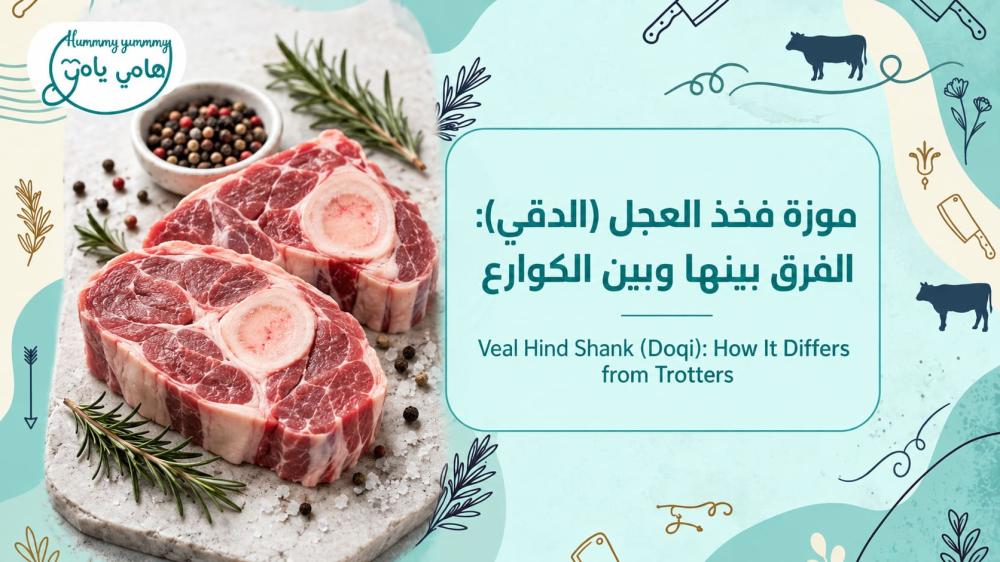
Before ordering veal shank, ask yourself three questions: do you want broth or a slow-cooked casserole, meat around a bone, or steak-style slices? The answer separates veal shank from trotters and round steak.
Veal hind shank, sometimes called doqi by certain butchers when referring to hind shank, is a leg cut with a visible bone and meat around it. It is not trotters, and it is not round steak. It is chosen for soups, stews, and slow cooking rather than large boneless slices.
What is veal hind shank or doqi?
Veal shank comes from the lower leg area and usually appears as bone-in pieces with a round bone in the center. Some markets call this shank, while some butcher naming systems may use doqi for hind shank. Always confirm the exact cut because names can vary.
Shank is not the same as regular round meat. Veal round is used for slices and different cooking styles, while shank is valuable because meat and bone cook together in a dish that needs time.
If this is the cut you need, you can check Fresh Beef Shank.

The three-way difference: shank, trotters, and round
The confusion happens because all three are veal-related cuts, but they are not the same. Shank is meaty leg around bone, trotters are feet, and round is a larger hindquarter muscle used more for slices.
| Cut | Location | Best use |
| Veal shank | Lower leg around bone | Soup, stew, slow cooking |
| Veal trotters | Feet | Traditional trotters dishes |
| Veal round | Hindquarter muscle | Slices, steak-style dishes, varied cooking |
If your goal is a traditional trotters dish, choose Fresh Veal Trotters. If your goal is slices or steak-style cooking, local veal round steak is closer than shank.

Best uses and limits
Veal shank works well in soups, stews, and slow-cooked dishes. The bone is part of the point of the cut, because you are not buying it as boneless meat only.
Its limits are clear: it is not a steak substitute, it is not for quick thin slices, and it is not the right choice if you want mostly boneless meat.
For an Arabic guide comparing boiling cuts, you can also read the best veal cuts for boiling.
Meat versus bone: set the right expectation
A common question is whether veal shank has a lot of meat. The answer depends on your expectation. You do not buy shank for large steak-style slices; you buy meat around bone for a slow-cooked dish.
If you do not want bone, shank is not the first choice. If you want a bone-in cut for soup or stew, it fits that role well.

When should you avoid veal shank?
Avoid veal shank if you want steak, grilled slices, mostly boneless meat, a quick recipe, or a traditional trotters dish. Each of these goals points to a different cut.
Round is for slices, trotters are for foot-based dishes, and shank is for soup and slow cooking around the bone.
Veal shank is not lamb shank
Do not confuse veal shank with lamb shank. The names are similar, but the animal and product are different. For distinction only, you can view Lamb Shank. This article focuses on veal shank versus veal trotters and round.
The rule is simple: identify the animal, identify the cut, then choose the cooking method.
Choose one based on your dish
Want soup or a slow-cooked casserole with meat around bone? Choose veal shank. Want a traditional trotters dish? Choose trotters. Want slices or steak-style cooking? Choose veal round.
When ordering, say clearly: I need veal shank for soup or stew, not trotters and not round steak. If you use the word doqi, confirm that the butcher means hind shank in their naming system.
The right meat choice depends on the result you want, not only the cut name.
Frequently Asked Questions
What does doqi mean in veal cuts?
Doqi is used by some butchers to refer to hind shank, but you should confirm the exact meaning when ordering.
Is veal shank good for steak?
No. Veal shank is better for soups, stews, and slow cooking.
Is veal shank the same as trotters?
No. Shank is meat around a leg bone, while trotters are feet.
Does it have a lot of meat?
It has meat around bone, but it is not comparable to round for boneless slices. Buy it when you want a bone-in slow-cooking cut.