
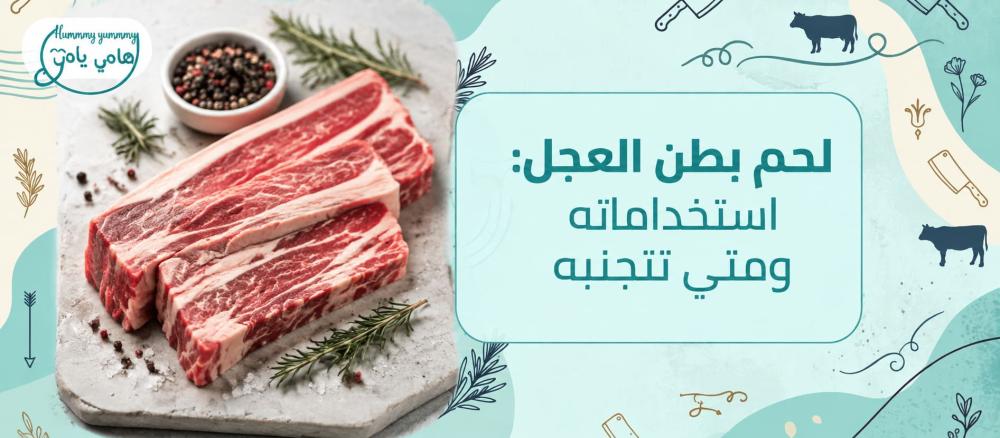
The common trap is treating veal belly like a cheap steak for grilling. Veal belly, often connected with flank-style lower abdominal cuts, has long muscle grain. It can work well when sliced thin and cooked quickly, but it performs poorly when treated as a thick steak or large slow-cooking cubes.
This is a cut you judge with your eyes, not by name alone. If the meat layer is clear and the fat can be trimmed, it may suit thin quick slices. If fat visually dominates the piece, the honest decision is to skip it or ask for trimming before weighing.
The cheap steak trap
Many buyers are attracted to veal belly because it can look like an economical grilling cut. But it is not a direct substitute for premium steak cuts, and it should not be bought just because the name or price feels appealing.
If you buy it for thick steaks or kabsa-style cubes, you may end up with a firm texture or more fat than expected. This article is not here to oversell the cut; it is here to make the buying decision clearer.

Where is veal belly, and why does the grain matter?
Veal belly comes from the lower side and abdominal area, close to the flank and lower rib region. Butcher terminology may vary, so the visual structure matters more than the label alone.
The key feature is the long muscle grain. That is why slicing matters. Thin slices cut against the grain are usually easier to eat, while ignoring the grain can make the same cut feel tougher.
Long grain is not automatically a defect. The real problem is buying the cut and cooking it as if it were a different piece of meat.
How to judge the piece before buying
Look at the relationship between meat and fat. Buy it when the meat layer is clearly visible, the grain can be identified, and the fat looks like something that can be trimmed rather than the main body of the piece.
Skip it when fat covers so much of the piece that the meat is unclear, or when you already know you will have to remove a large portion before using it. Fat does not automatically make the piece bad, but it can make it the wrong purchase for your meal.
For general buying checks, you can also read how to judge meat quality when buying. With veal belly, keep your eye on the visible meat layer and whether the fat can reasonably be trimmed.

Is veal belly good for grilling?
It can be, when the plan is thin slices cooked quickly over high heat. Think of fajita-style strips, shawarma-style slices, or fast stir-fry cooking. In this case, you are not asking it to behave like a premium thick steak.
The practical rule is: thin slices, high heat, and cutting against the grain. Do not turn that into a promise that every veal belly piece will work. The actual piece, trimming and thickness all matter.
If you want a thick tender steak, do not start with belly just because it is available. Ask for a better-suited cut or change the plan to thin slices.

Better uses and wrong uses
Better uses include thin grilled slices, quick high-heat cooking, stir-fry strips, and sometimes grinding when the trimmed piece fits that purpose better than steak-style use.
Less suitable uses include thick steak, large cubes for long cooking, and kabsa when you need tender cubes for a slow dish. Do not force a long-grained, variable-fat cut to do the job of another cut.
If ready ground meat is your goal, check Fresh Ground Beef instead of buying a whole piece and discovering later that too much of it needs trimming.
Veal belly vs qanlo vs breast
These names should not be treated as interchangeable. Belly has visible grain and may carry fat that needs evaluation. Qanlo is a different cut by location and structure. Veal breast has its own character and may suit slower cooking depending on preparation.
| Cut | General character | Better match |
| Veal belly | Visible grain; fat level varies by piece | Thin slices, quick grilling or stir-fry |
| Qanlo | Different from belly in location and structure | Choose according to the specific dish |
| Veal breast | Different chest-area cut | Cooked dishes and longer methods depending on preparation |
Is veal belly fatty?
It can look fatty, and some pieces may still be usable after trimming. You do not need a numeric fat percentage to decide. Ask yourself whether you can clearly see enough meat for your use, or whether the fat layer will make you remove too much.
If fat is visually dominant, skip the piece. That is not harsh; it is a practical buying rule.
How can you reduce toughness?
There is no magic trick that turns any veal belly piece into a tender steak. But simple rules help: avoid unnecessary thickness, identify the grain, slice against the grain, and cook it in a way that fits the cut.
The common issue is not always the meat itself. Sometimes the cut was simply chosen for the wrong dish. If your meal needs tender cubes and longer cooking, belly is usually not the practical starting point.
When should you skip veal belly?
Skip it when fat dominates visually, when you want a thick steak, when you need cubes for a long-cooked dish, when you cannot see the meat clearly under the fat, or when the piece cannot be prepared the way your dish requires.
Do not buy veal belly because the name sounds right. Buy it only when the actual piece fits your meal.
How to order it from Hummmy Yummmy
There is no confirmed standalone veal belly SKU used here, so no unverified product link is added. If you are shopping for veal in general, start from the local veal category and choose according to the dish, not the name alone.
If veal belly is specifically available, ask before weighing: is meat visually dominant, does it need trimming, and can it be prepared as thin slices? These questions matter more than ordering by name only.
Frequently Asked Questions
Is veal belly fatty?
It can be fatty in some pieces. The practical rule is visual: if fat dominates, skip it or ask for trimming.
Can you use it as steak?
It makes more sense as thin quick slices, not as a premium thick steak. Do not buy it for thick steak without seeing and confirming the piece.
Can it be used for ground meat?
It can be used when preparation suits that goal, but if you want ready ground meat, choose a dedicated ground product.
How do you reduce toughness?
Use thin slices, identify the grain, and cut against the grain. Most importantly, choose the cut for the right meal from the start.
Bottom line: look before you weigh
Veal belly is not a bad cut, and it is not a cut to buy blindly. If the meat layer is clear and your plan is thin high-heat slices, it can make sense. If fat dominates or your dish needs thick cubes and long cooking, skip it and choose a clearer fit.