
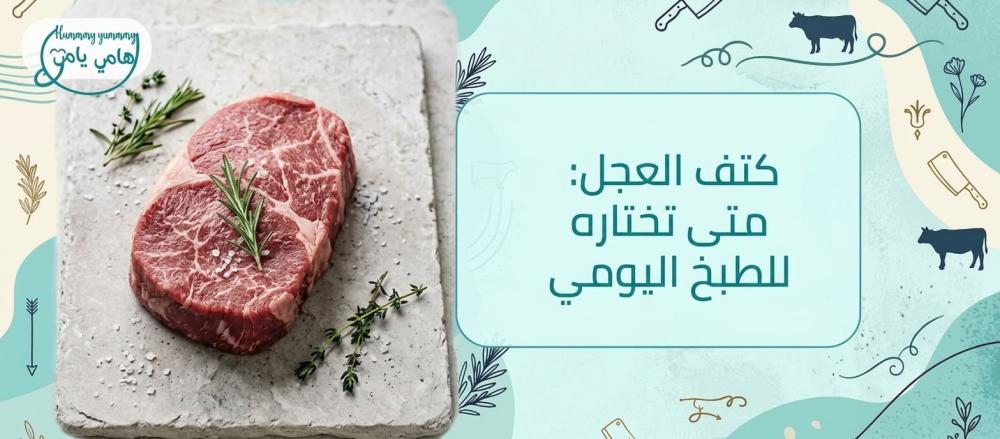
Is this week’s meal going to spend enough time on the heat, or do you need something quick? That question is the starting point for choosing veal shoulder. It is not a cut for every cooking method; it works best for family meals such as kabsa, madhgoot, stews, and pot cooking, but it is not the first choice for quick grilling or steak-style slices.
Veal shoulder comes from a working front section, so its value appears when it is cooked properly. The practical rule is simple: if the dish has enough time in the pot, shoulder can be a smart choice; if you need a fast meal, another cut may fit better.
Where is veal shoulder, and what does it mean at the butcher?
Veal shoulder is located in the front shoulder area. Depending on local cutting habits, customers may hear names connected to the forequarter or chuck-style section. The name alone is not enough; always connect the cut to the cooking method you want.
The main advantage of shoulder is not speed. Its advantage is flavor and a satisfying texture in dishes cooked inside a pot. That is why it suits weekly family meals where the meat cooks with rice, vegetables, sauce, or broth.

Why does it have rich flavor, and why can it become tough?
The shoulder area works more than some other parts of the animal, which affects its texture. When cooked with the right method, that structure becomes an advantage: deeper flavor, richer body, and better integration with the dish.
The problem starts when shoulder is treated like a quick cut. Using it as a fast pan steak or high-heat slice can make it feel firm. That does not mean the cut is poor; it means the cooking job does not match the cut.
Veal shoulder rewards patience and punishes rushing.
Everyday dishes: when is veal shoulder a good choice?
Choose veal shoulder when the dish is built around time in the pot: kabsa, madhgoot, stews, meat with vegetables, or cubed meat cooked with sauce. In these cases, you are not looking for a fast tender slice; you are choosing a cut that improves with proper cooking.
For kabsa, shoulder can work well because it cooks with broth and spices and gives the dish a stronger meat character. It can also be requested as cubes when that format suits the dish, or prepared as part of a veal order if a dedicated shoulder SKU is not available.
For bone-in veal options suited to family cooking, you can check Veal Meat with Bone and add the suitable cutting note for your dish when ordering.

Veal shoulder vs veal round vs veal neck
The right choice depends on the cooking method, not only the cut name. Shoulder serves pot cooking, round is closer to slices and faster preparations, while neck is usually selected when rich broth and flavor extraction are the goal.
| Cut | Best for | Choose it when |
| Veal shoulder | Kabsa, madhgoot, stews, and pot cooking | You have enough cooking time and want clear flavor |
| Veal round | Slices, faster meals, and some home steak uses | You need a more direct cooking style |
| Veal neck | Broths and dishes based on flavor extraction | The goal is rich broth rather than a quick slice |
When should you avoid veal shoulder?
Avoid veal shoulder when you need fast grilling, pan steak, or a meal with very limited cooking time. In those cases, choosing a faster cut is better than forcing shoulder into a result it is not designed for.
If your goal is a slice closer to steak-style cooking, consider local veal round steak instead of relying on shoulder. The practical rule: less time on heat often means round; longer time in the pot points toward shoulder.
Bone-in or boneless: how should you order it?
Bone-in shoulder can suit some pot dishes where a deeper character and traditional presentation are desired. Boneless shoulder or cubes are often more practical for kabsa, madhgoot, and everyday meals because they distribute more easily through the dish.
There is no confirmed standalone veal shoulder SKU used here. If you cannot find it as a product, ask for the suitable shoulder portion or cutting style when ordering veal, and start from the local veal category to see available options.

Is veal shoulder the same as lamb shoulder?
No. Similar wording does not make them direct substitutes. Veal shoulder and lamb shoulder come from different animals, with different flavor profiles and cooking expectations. When searching or ordering, say veal clearly to avoid confusion.
For distinction only, you may view lamb shoulder, but this article is about veal shoulder for everyday cooking, not a full lamb-versus-veal comparison.
Can veal shoulder be used for ground meat?
Some veal parts may be used in ground meat blends depending on the cutting plan and final cooking goal. However, that does not mean every veal shoulder order should become ground meat. If you need ready ground meat for a specific dish, choose a dedicated ground product.
For ready-to-use ground meat, you can check Fresh Ground Beef and choose based on the final dish, not only the original cut name.
Frequently Asked Questions
Is veal shoulder good for kabsa?
Yes. Veal shoulder works well for kabsa because it suits pot cooking and blends with broth and spices when given enough cooking time.
Is veal shoulder better than veal round?
Neither is better in every case. Shoulder suits slower pot cooking, while round is closer to slices and faster preparations.
Can veal shoulder be grilled?
It is not the first choice for quick grilling or steak-style cooking. For everyday decisions, use it for pot cooking rather than fast slices.
Should I order it bone-in or boneless?
It depends on the dish. Bone-in can add character to some pot meals, while boneless cubes are more practical for everyday cooking.
Practical takeaway
Veal shoulder is a strong choice when the meal deserves time: kabsa, madhgoot, stew, or everyday pot cooking. It is not the first choice for quick steak or short grilling. Start with the right question: do you have enough time for cooking? If yes, shoulder can be smart; if not, round may be closer to what you need.