
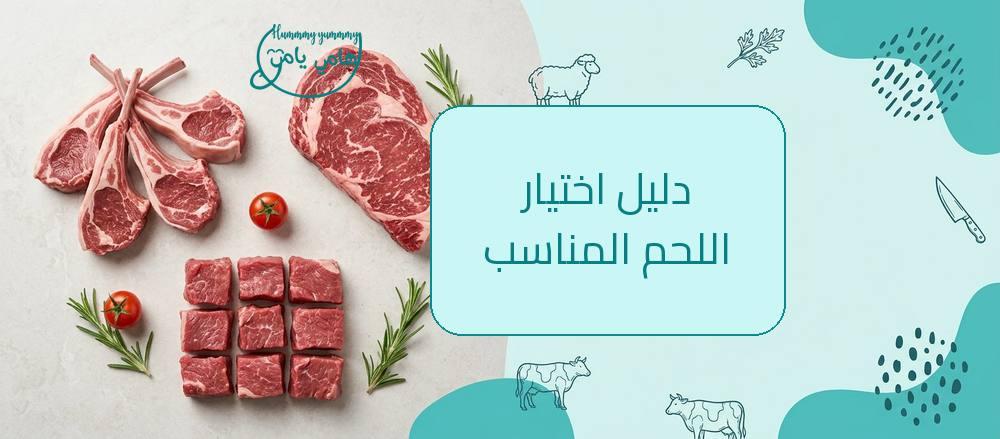
Choosing the right meat starts with the dish, not the animal name alone. First decide whether you are making kabsa, stew, boiled meat, grilled skewers, lamb chops, or steak. Then match the cooking method with a suitable cut, preparation style, bone-in or boneless format, and quantity. Harri, Naeemi, Sawakni, camel meat, veal, and beef can all work well when the cut and preparation fit the meal you want to serve.
Quick answer: Make the decision in this order: dish → cooking method → cut → preparation → meat type → quantity. The right cut for your recipe matters more than choosing one meat name as the “best” for every situation.
How should you choose meat before buying?
Before comparing Harri with Naeemi, or lamb with beef, answer a few practical questions. They will narrow the options and help you describe your order clearly.
What are you cooking?
Begin with the final dish: kabsa, mandi, stew, boiled meat, charcoal grilling, steak, or a quick family meal. A cut that works well with slow cooking is not automatically the right choice for fast grilling. Once the dish is clear, you can replace a broad question such as “What is the best meat?” with a useful request such as “Which bone-in cut suits kabsa?”
Do you want bone-in or boneless meat?
This depends on the recipe and serving style. Bone-in cuts are common in rice dishes, stews, and several boiled preparations. Boneless cuts can be easier when you need uniform cubes, simple portioning, mincing, or clean presentation. Neither format is always better; choose the one that matches the finished dish.
Is the cooking method fast or slow?
Steak and some grilling methods call for cuts selected for quick cooking. Stews, braised dishes, and other slower preparations open the door to different cuts. Focus on the cut and its intended use rather than assuming that every part of one animal will behave the same way.
Are you buying for one meal or several meals?
For weekly cooking, plan the portions before ordering. You may want one pack for rice, cubes for stew, minced meat for another recipe, and a cut for grilling. Buying everything in one cutting style can make the order less flexible even when the meat type itself is suitable.
Is this for a family meal or a gathering?
A gathering requires a broader decision: the main dish, guest count, serving style, side dishes, bone-in or boneless presentation, and whether you need a whole carcass, a meat box, or selected cuts. Avoid relying on a fixed quantity-per-person rule without checking the actual product and menu, because a kabsa gathering is different from a barbecue.
What are the most common meat choices in Saudi Arabia?
Saudi shoppers can choose among several familiar lamb types, camel meat, veal, and beef. The useful comparison is not a ranking from best to worst. It is a comparison of how well the available cut and preparation match your recipe.
When should you consider Harri lamb?
Harri is a familiar lamb choice in Saudi Arabia and appears in rice dishes, boiled preparations, stews, and gatherings depending on the cut. Choosing Harri is only the first step. Meat prepared for kabsa is not necessarily the same product you would select for grilled chops or another dish.
If you want a mixed selection, you can review the Super Harri Box. Check its current page details and availability before ordering rather than assuming that its contents or specifications are permanent.
When should you consider Naeemi lamb?
Naeemi is another known lamb option for home cooking and gatherings. When comparing it with Harri, use clear criteria: the dish, cut, cutting style, bone-in or boneless format, and your household’s preference. A product such as Mixed Naeemi Lamb illustrates one published preparation, but the current product page should remain your source for the exact details.
What is the practical difference between Harri and Naeemi?
Both can be used in more than one Saudi recipe. For that reason, the buying decision should not be reduced to a universal statement that one is always better. Start with the dish and required cut, then choose the available option that fits your preference and preparation needs.
When should you consider Sawakni lamb?
Sawakni is another lamb option found in the Saudi market. Depending on the cut, it can be considered for rice dishes, slower cooking, and larger meals. Before ordering, specify cutting size, cooking method, quantity, and whether you want bone-in meat. The store lists options such as Sawakni lamb with bone; choose according to the recipe rather than the name alone.
When should you consider camel meat?
Camel meat has a place in Saudi cooking, including rice dishes and stews. The key point is that “camel meat” does not describe one cut or one cooking result. Tell the retailer whether you need meat for kabsa, stew, boneless cubes, or another defined preparation. You can begin with the store’s camel meat category and review the currently published products.
When should you choose veal or beef?
Veal and beef cover a wide range of uses: cooking cubes, minced meat, burgers, grilling cuts, steak cuts, and slower-cooked pieces. This makes the cut especially important. Someone preparing a stew is not necessarily looking for the same product as someone preparing steak, and minced meat serves a different purpose from large bone-in pieces.
Start with the veal and beef category, then move to the specific cut that fits your recipe.
Meat comparison by intended use
| Meat type | Uses to consider | What to specify before ordering |
| Harri lamb | Kabsa, rice dishes, boiling, selected stews, gatherings | Cut, cutting size, bone-in or boneless |
| Naeemi lamb | Saudi home cooking, kabsa, gatherings | Dish, cut, and preparation style |
| Sawakni lamb | Rice dishes, slower cooking, larger meals | Cut size, quantity, and bone preference |
| Camel meat | Kabsa, stew, and other camel-meat recipes | Cut and cooking method |
| Veal and beef | Daily cooking, mince, grilling, steak | Cubes, mince, grilling cut, or named steak cut |
This table is a starting point, not a fixed rule for every part of the animal. The use can change within the same meat type according to the cut and preparation.
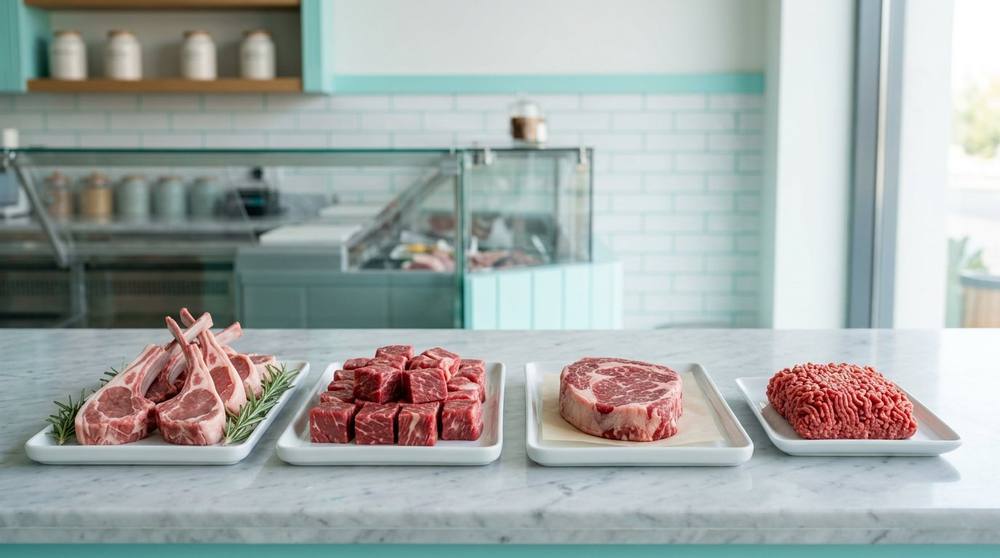
How do you choose the right cut for the cooking method?
One of the most common mistakes is choosing the animal first and then treating all its cuts as interchangeable. A more practical approach starts with the cooking method and works backward to the cut.
Which cuts work for slower cooking?
For stews, braised dishes, selected boiled preparations, and rice dishes, look for cuts intended for the cooking method you plan to use. Ask about cutting size, bone-in or boneless format, and how the meat will be served. Do not rely on the animal name alone, because cuts from the same category can serve different purposes.
Which cuts work for grilling?
Define the grilling format first: chops, steak, cubes, skewers, or prepared pieces. If you want chops, choose a product such as fresh lamb ribs. Skewers need evenly sized cubes, while steak requires a named cut and a thickness suited to your cooking method.
How do you choose a steak cut?
“Steak” is not one cut. Familiar options include ribeye, tenderloin, and T-bone. The choice depends on the texture you prefer, visible fat, thickness, and cooking method. Review a dedicated option such as ribeye steak or tenderloin steak instead of buying generic beef and expecting the same result.
What is the best meat for Saudi kabsa?
For kabsa, begin with a meat and cut suited to cooking with rice or to being cooked before serving with it. Lamb is a common choice, including Harri, Naeemi, and Sawakni according to preference and availability. Camel meat is also used in Saudi rice dishes. The practical decision is to choose the meat type, decide between bone-in and boneless, and request preparation that fits the recipe.
Is Harri lamb suitable for kabsa?
Harri can be used for kabsa and other rice dishes. The final result does not depend on the breed name alone; the cut, cutting size, and cooking process also matter.
Is Naeemi lamb suitable for kabsa?
Naeemi can also be used. The comparison between Harri and Naeemi therefore comes down to household preference and the required preparation rather than a rule that one works and the other does not.
Can camel meat be used for kabsa?
Camel meat is used in Saudi rice dishes. Choose the cut according to the recipe and describe the required preparation clearly instead of placing a general order for camel meat.
What is the best meat for grilling?
For grilling, the cut is more important than the broad meat category. Choose lamb chops for chops, a dedicated steak cut for steak, evenly sized cubes for skewers, and prepared pieces for the specific grill you plan to use. Before ordering, decide on the grill type, cut format, thickness, bone preference, and whether you want a marinated or unseasoned product.
What is the best meat for everyday cooking?
The practical everyday choice is meat that is easy to portion and matches your weekly recipes. If the plan includes vegetable stew, pasta with minced meat, rice with meat, and grilling, do not order everything in the same cut. Divide
the order by intended use so that you do not have to force one cut into every recipe.
What is the best meat for a Saudi gathering?
Meat for a gathering should not be selected by price or size alone. Start with the main dish, guest count, serving style, cut size, bone preference, and whether you need a whole carcass, a box, or selected cuts. After defining the event, review the whole carcass category rather than choosing a product first and trying to build the menu around it.
Lamb or beef: which should you choose?
Consider lamb when:
- The recipe is built around lamb.
- You are making lamb kabsa or another lamb-and-rice dish.
- You want lamb chops or another lamb grilling cut.
- Your household prefers lamb for gatherings.
Consider veal or beef when:
- You want a named steak cut.
- You need minced meat for a defined recipe.
- The recipe calls for beef cubes.
- You need a specific beef cut for a specific cooking method.
This is a comparison by intended use, not a universal quality ranking.
How should you compare two products before ordering?
When two products appear similar, do not compare only the animal name or photograph. Read the description and look for information that helps you imagine how each product will work in your kitchen. The useful question is not only “Which tastes better?” because taste depends on preference and preparation. Ask “Which one is closer to the dish I am making?”
Compare the cut format and intended use
Check whether the product is a whole carcass, mixed cuts, chops, cubes, mince, or steak. Two products can share the same meat type and still serve completely different dishes because of the cutting format. If the cut is unclear, do not assume it is suited to grilling or slow cooking; request clarification.
Compare bone-in and boneless preparation
Bone-in is not automatically an advantage or disadvantage. Think about the final presentation. Do you want pieces served with rice? Do you need cubes that are easy to portion? Will the recipe require mince or strips? The answer makes the product comparison practical.
Compare the preparation that saves work
Cutting, cleaning, and portioning can be part of the product’s value to you. If time is limited, the option closest to the recipe may be more practical than one that needs substantial preparation at home. Do not assume any service that is not clearly published; check the current product options or add a clear note.
Do not compare by price alone
Price alone does not tell you the cut, bone content, or preparation style. Because prices and specifications can change, compare the information displayed on the live product pages at the same time. The goal is not automatically to select the lowest or highest price, but to reduce the gap between what you order and what the recipe needs.
How can you describe your order clearly online?
The clearer your intended use is, the easier the selection becomes. Instead of writing “I want good meat,” state the dish, cut format, and bone preference. You do not need technical language; describing the result you want is a useful starting point.
- For kabsa: name your preferred meat type, bone preference, and that the cutting should suit kabsa.
- For stew: state that the meat is for slower cooking and whether you need cubes or bone-in pieces.
- For grilling: specify chops, steak, cubes, skewers, or prepared pieces rather than writing only “barbecue meat.”
- For weekly cooking: divide the order by recipe instead of using one cutting style for everything.
- For a gathering: state the main dish and serving format before choosing the carcass, box, or cuts.
If the product page allows preparation notes, use them to explain the request briefly. If a detail affects your decision and is not clearly published, ask the store instead of building the order on an assumption. This is particularly important when product names appear similar but the cut format or box contents differ.
Should you buy a meat box or separate cuts?
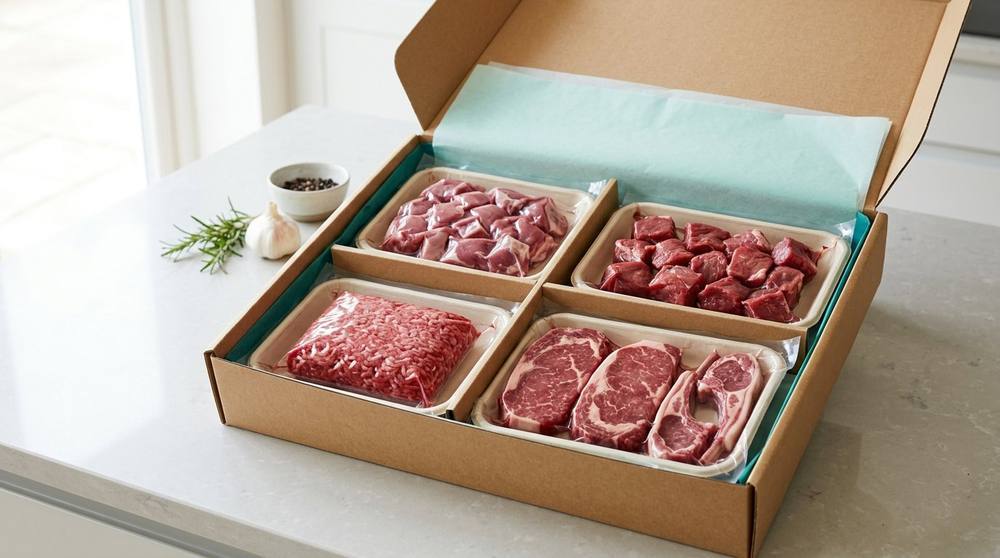
The choice depends on how you will use the order. A meat box can be practical when you want variety or need several meals, as long as the published contents fit your plan. Separate cuts give you more control when the recipe is specific, such as lamb chops, steak, mince, or a particular stew.
Choose a box when your plan is varied
If you are preparing several dishes during the week, review the box contents one by one and assign an intended use to each part. Do not rely on the box name alone, and do not assume how many meals or people it will serve; that changes according to contents and serving style.
Choose separate cuts when the recipe is specific
If you already know that you are making steak, chops, or a particular stew, moving directly to the needed cut reduces confusion. It also lets you compare products that serve the same use rather than comparing very different selections.
Review the whole basket before checkout
Look at the products together and ask whether each one has a clear use. Have you repeated one cutting style without a reason? Did you select a product because its name sounded attractive or because it serves an actual recipe? A quick review may show that you need more variety, or that one specific cut is more suitable than a full box.
What should you check before completing the purchase?
- The store and product source are clearly identified.
- The cut or preparation format is stated.
- Bone-in or boneless information is clear where relevant.
- The cutting style fits the recipe.
- Published product and packaging information is understandable.
- Product images and descriptions help explain what you will receive.
- The package is intact on arrival, and you follow the storage directions published on the product or by the competent authority.
What are the common mistakes when buying meat?
- Choosing the meat before the dish: start with the meal, then cooking method, cut, and meat type.
- Treating every cut the same: a quick-grilling cut is not automatically the right stew cut.
- Comparing by price alone: also compare cut, preparation, bone format, and intended use.
- Buying without a portioning plan: decide how each part of the order will be used.
- Ordering “grilling meat” without details: specify steak, chops, cubes, skewers, or prepared pieces.
- Focusing on breed but ignoring preparation: cutting style can change how practical the product is for the recipe.
Quick table: where should you start?
| Your need | Practical starting point |
| Kabsa | Lamb or camel according to preference, with preparation suited to the recipe |
| Gathering | Define the dish, guest count, and serving style before the meat type |
| Lamb grilling | Lamb chops or another dedicated grilling cut |
| Steak | A named beef or veal steak cut |
| Stew | A cut intended for slower cooking and prepared for the recipe |
| Everyday meals | Portions divided according to the weekly menu |
| Minced meat | Meat prepared specifically for mincing and the intended dish |
| Skewers | Evenly sized cubes prepared for grilling |
Quick meat selector: what are you cooking today?
I am making kabsa
Start with Harri, Naeemi, or Sawakni lamb according to preference, or camel meat if that is the recipe. Then specify bone preference and cutting style.
I am hosting a gathering
Start with guest count, the main dish, and serving format. Then decide between a whole carcass, a box, or selected cuts. Do not rely on a general quantity figure without checking the actual product.
I enjoy grilling
Decide whether you want chops, steak, cubes, skewers, or prepared pieces. The product choice becomes much easier after that.
I cook every day
Choose an order that can be divided across the weekly menu instead of buying one large quantity in one cut.
This is my first online meat order
Describe the dish. “I need meat prepared for family kabsa” is more useful than “What is your best meat?”
Frequently asked questions
What are the best types of meat in Saudi Arabia?
There is no single type that is best for every use. Harri, Naeemi, Sawakni, camel meat, veal, and beef can suit different dishes. Choose according to the cooking method, cut, preparation, and household preference.
What is the best meat for kabsa?
Lamb is a common choice for Saudi kabsa, and camel meat is also used in rice dishes. The cut and preparation matter as much as the meat type.
What is the difference between Harri and Naeemi?
Both are familiar lamb choices. Compare them according to the dish, cut, preparation, and personal preference rather than treating one as universally better.
What is the best meat for grilling?
It depends on what you are grilling. Choose steak cuts for steak, lamb chops for chops, and evenly prepared cubes for skewers.
How do I choose the right meat cut?
Start with the cooking method: grilling, boiling, slower cooking, mincing, or cooking with rice. Then select a cut and preparation suited to that technique.
Use this rule before ordering
Dish → cooking method → cut → preparation → meat type → quantity. This turns “What is the best meat?” into “Which meat and cut suit the dish I am making?”—a much more useful buying question.
Once your dish and preparation are clear, browse the currently available Hummmy Yummmy products and choose the cut that best matches your plan.