
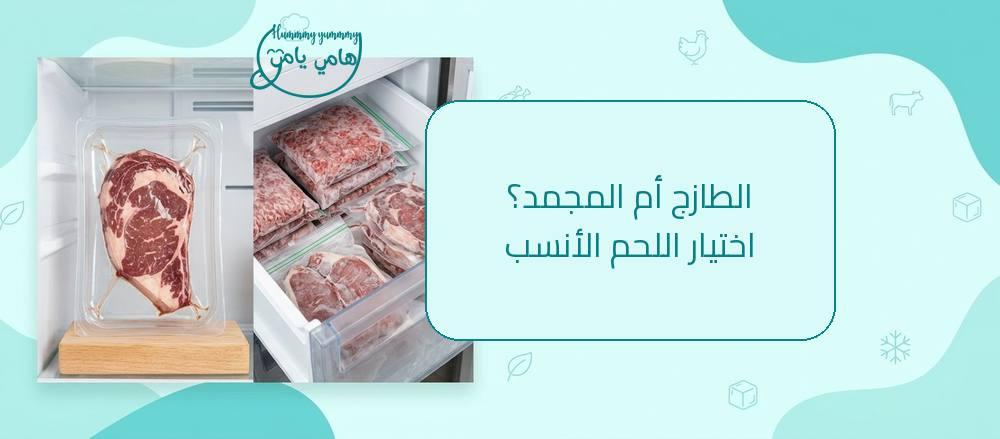
The idea that every piece of fresh meat is automatically better than every piece of frozen meat is too simplistic. What reaches your plate depends on more than whether the label says “fresh” or “frozen.” The original quality of the meat, processing, packaging, transportation, storage, thawing, and cooking all play a role.
The short answer is that fresh meat is not automatically the better choice in every situation. Fresh or chilled meat is often convenient when you plan to cook soon after delivery. Frozen meat can be practical when you are buying a larger quantity for several meals, provided it has been properly packaged, stored, and thawed.
Freezing also does not automatically mean that meat has lost its nutritional value. The USDA Food Safety and Inspection Service states that freezing itself does not destroy nutrients and that nutrient value changes relatively little during the frozen storage of meat and poultry.
A better question, therefore, is not simply “fresh or frozen?” Ask instead: When will I cook it? What cut am I buying? What am I cooking? How much do I actually need?
What Is the Difference Between Fresh, Chilled, and Frozen Meat?
Before comparing fresh vs frozen meat, it helps to separate three terms that are often used interchangeably even though they describe different conditions.
What Do We Mean by Fresh Meat?
In this guide, “fresh” is used in the practical consumer sense: meat intended for relatively near-term use that has not gone through a freezing stage.
The word “fresh,” however, should not be treated as a complete quality guarantee. A fresh cut can still be poorly handled, packaged, transported, or stored.
Likewise, freezing a good-quality cut does not automatically make it a poor-quality product.
Source, processing standards, packaging, and handling remain important regardless of the label.
What Is Chilled Meat?
Chilled meat is kept under refrigeration without being frozen.
This makes the cold chain important. The meat must remain under appropriate refrigerated conditions through handling, transportation, delivery, and storage.
Saudi Food and Drug Authority guidance stresses the importance of maintaining safe refrigeration conditions for perishable foods, including meat, during storage and transport.
So when you purchase chilled meat, look beyond the appearance of the cut. Clear delivery conditions, packaging, storage instructions, and your intended use date matter too.
What Is Frozen Meat?
Frozen meat has been preserved through freezing so it can be stored for later use.
But the word “frozen” alone tells you very little about the original quality of the meat or how it was handled.
The final result can be affected by the quality of the meat before freezing, freezing conditions, packaging, stability during frozen storage, thawing, and cooking.
Scientific literature shows that freezing, frozen storage, and thawing can affect water distribution and some quality characteristics in meat. The extent of those changes, however, varies according to the process and product.
Fresh vs Frozen Meat: Quick Comparison
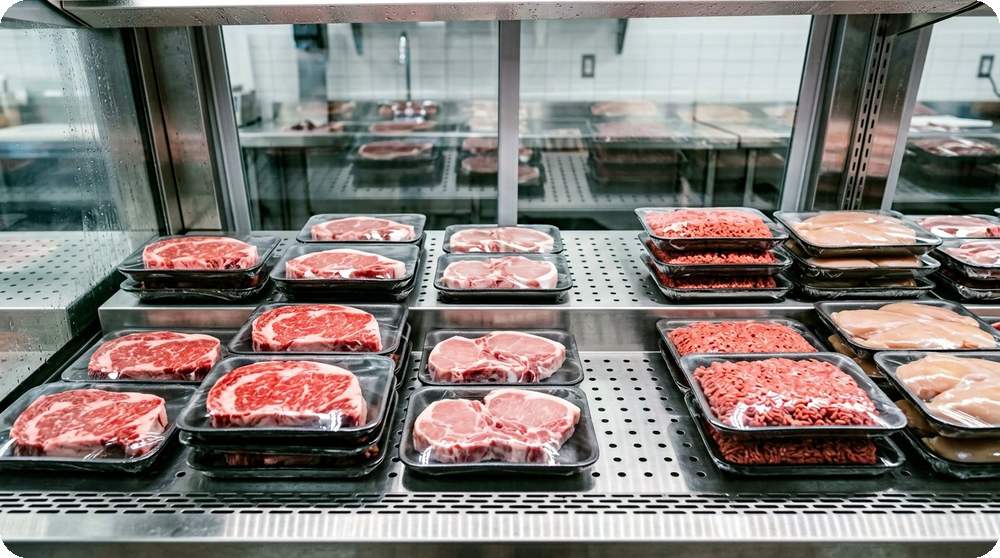
Rather than trying to choose one universal winner, compare the two according to your needs.
| Factor | Fresh or Chilled Meat | Frozen Meat |
| Intended use | Usually convenient for near-term cooking | Useful for later meals |
| Meal planning | Requires relatively prompt use | Practical for portioning |
| Storage space | Primarily requires refrigerator space | Requires freezer capacity |
| Handling | Maintain proper refrigeration | Maintain freezing and thaw safely |
| Large quantities | Requires a clear use plan | Practical when properly portioned |
| Quality assessment | Depends on source, processing and transport | Depends on source, freezing, storage and thawing |
| Practical fit | Immediate meals and planned occasions | Meal preparation and larger planned purchases |
The difference between fresh and frozen meat is therefore not only about quality. It is also about
timing and use.
If you need a small amount for dinner today, a large box of meat may provide little practical benefit. If you are organizing meals for several weeks, buying a well-portioned quantity may make much more sense.
Is Frozen Meat Lower Quality Than Fresh Meat?
Not necessarily.
To determine whether one cut is lower quality than another, you would first need to know the original quality of both cuts and how each was handled.
Several factors can affect the result.
Original meat quality: Freezing does not turn poor meat into premium meat, but it does not automatically destroy good meat either.
Packaging: Appropriate freezer packaging helps protect the product during storage.
Freezing and storage conditions: Stable frozen storage is different from repeated temperature fluctuations.
Thawing: A high-quality product can still produce a disappointing cooking experience when thawed incorrectly.
Type of cut: The characteristics you expect from ribeye are different from what you expect from meat intended for slow cooking or grinding.
From a nutrition standpoint, official guidance does not support the claim that frozen meat is inherently nutritionally poor. USDA states that freezing itself does not destroy nutrients, although product quality can gradually change during storage.
So instead of asking, “Is frozen meat bad?”, ask: Was the original meat good, and was it frozen, stored, and thawed correctly?
Does Freezing Affect Flavor, Juiciness, or Tenderness?
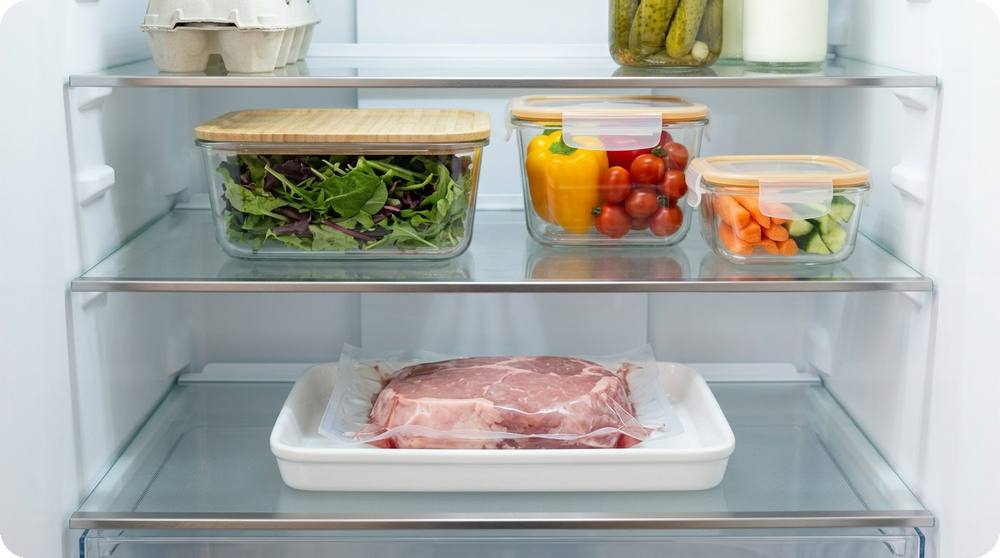
Freezing and thawing can affect some aspects of the eating experience, but the size of the effect is not the same for every cut or every freezing process.
Meat naturally contains water. During freezing, some of that water forms ice crystals. During thawing, part of the liquid may be released into the package.
USDA guidance explains that water naturally present in meat and poultry forms ice crystals during freezing and that some liquid may be released during thawing.
That does not mean every frozen steak will automatically be less juicy than every fresh steak.
Results depend on several variables, including the cut, freezing process, storage conditions, thawing method, and cooking technique.
A 2024 beef study comparing different thawing conditions found meaningful differences between thawing methods, with refrigerator thawing performing better than room-temperature thawing on several quality and safety measures.
Saudi Food and Drug Authority guidance also advises consumers not to thaw food at room temperature and identifies refrigerator thawing as the safest method.
Therefore, if two pieces of meat tasted different on two separate occasions, it would be inaccurate to assume that freezing was the only reason. The cuts, thickness, storage, thawing, seasoning, and cooking may all have differed.
Which Is Better for Different Cooking Methods?
Kabsa and Slow Cooking
For kabsa, mandi, stews, and other long-cooking dishes, start with the cut of meat rather than the fresh-versus-frozen label.
Both meat intended for near-term use and properly thawed frozen meat can be used, provided the cut itself suits the dish.
For a family gathering or Saudi-style occasion, quantity and delivery timing may matter more than whether every piece was purchased for immediate cooking.
This section should link internally to your guide on calculating the right amount of meat.
Grilling
For grilling, cut, thickness, and preparation are especially important.
If the meat is frozen, plan the thawing process in advance rather than leaving it on the kitchen counter at the last minute. SFDA guidance recommends refrigerator thawing instead of thawing at room temperature.
There is no rule saying frozen meat cannot be used for grilling. Start with a grilling-appropriate cut and handle it correctly.
Steak
If you are trying steak for the first time, buying a small quantity is usually more sensible than committing to a large box.
For example, you could start with Ribeye Steak for a planned meal and decide whether you enjoy the cut before buying more.
To compare Ribeye, Tenderloin, and other cuts, review Hummmy Yummmy’s steak types guide before choosing the quantity.
Ground Meat and Everyday Cooking
Ground meat is useful for frequently prepared dishes such as kofta, baked dishes, sauces, and quick family meals.
When buying a larger quantity, dividing it into meal-sized portions before freezing can make everyday use easier. You avoid having to thaw a large package every time you need a smaller amount.
A versatile option such as Local Boneless Veal can also be purchased according to your actual meal plan rather than simply choosing the largest available quantity.
When Should You Choose Fresh or Chilled Meat?
Fresh or chilled meat may make more sense when you:
- Plan to cook shortly after delivery.
- Have an event or family gathering on a known date.
- Want to try a new cut before purchasing more.
- Have limited freezer space.
- Prefer buying smaller quantities more frequently.
- Do not want to portion, package, freeze, and thaw a larger order.
In these situations, there may be little value in purchasing a large box simply because the price per unit appears attractive.
Real value comes from buying meat you will actually use.
When Is Frozen Meat a Practical Choice?
Frozen meat or meat purchased for planned freezing can be useful when you are organizing several meals in advance.
It becomes especially practical when you have:
- Adequate freezer space.
- Suitable packaging.
- A meal plan.
- Portions divided before freezing.
- A safe thawing routine.
- A simple labeling system for cuts and storage dates.
SFDA guidance recommends dividing larger quantities of meat into smaller packages according to need and sealing them properly before freezer storage.
In other words, frozen meat is not an excuse for random bulk buying. It works best when there is a system behind the purchase.
How Do You Compare Meat Quality Before Buying?
Do not make “fresh or frozen?” your only quality question.
Before purchasing meat, check:
- Is the condition clearly stated: fresh, chilled, or frozen?
- What animal and cut are you buying?
- What weight will you receive?
- Is the product description clear?
- How is the meat packaged?
- How is the order delivered?
- Are storage instructions provided?
- Can you easily contact the seller if something is wrong?
- Is there a clear complaints or replacement policy?
- Are genuine customer reviews available?
- Does the quantity actually fit your needs?
If this information is unclear, that may matter more than the word “fresh” in a product title.
For more detail on evaluating the cut itself, review Hummmy Yummmy’s meat quality guide.
Suggested Internal Hummmy Yummmy Test
Hummmy Yummmy can later run a limited internal test comparing a near-term-use cut with a similar cut after freezing and safe thawing. Weight, thickness, cooking method, seasoning, and photos should be documented before any observations are published. The result should be described as a limited internal test, not a scientific rule for all meat.
The first should be cooked relatively close to preparation or delivery. The second should be frozen, stored, and thawed according to an approved method before being cooked using the same recipe.
Should You Buy a Large Quantity and Freeze It?
Before purchasing a box or a whole carcass, ask one question:
Do I have a plan for all of this meat?
| Your Situation | More Practical Decision |
| You have freezer space and a meal plan | A portioned meat box may work well |
| You repeatedly use one specific cut | Buy the amount you need of that cut |
| You are trying the store for the first time | Start with a smaller quantity |
| You have an upcoming gathering | Order according to the date and guest count |
| You cannot divide the order | Avoid a very large quantity |
| You need variety for several meals | A mixed box may be practical |
| You have limited freezer space | Avoid a large meat box |
If you plan several meals ahead, consider a meat box suitable for portioning meals.
If you want different cuts and already have sufficient storage space, you can also assess whether the Super Harri Box matches your actual meal plan.
The point is not that a meat box is better than individual cuts. Purchase size should follow usage.
Common Mistakes When Comparing Fresh and Frozen Meat
Mistake: Assuming every fresh cut is excellent.
Correction: Source, processing, transportation, and storage all affect quality.
Mistake: Assuming all frozen meat is low quality.
Correction: Original meat quality and freezing, storage, and thawing conditions all matter.
Mistake: Assuming a higher price always guarantees higher quality.
Correction: You need to compare the cut, source, weight, preparation, and service before judging value.
Mistake: Thawing meat on the kitchen counter and then blaming the meat for the result.
Correction: SFDA advises against thawing food at room temperature and recommends refrigerator thawing as the safest option.
Mistake: Buying a large quantity simply because it is on offer.
Correction: Without freezer space and a clear portioning plan, a large purchase may become inconvenient or wasteful.
Mistake: Comparing two different cuts.
Correction: Do not compare a steak cut with slow-cooking meat and attribute every difference to freezing.
Mistake: Judging safety or quality from color alone.
Correction: Meat color can change for several reasons, including during frozen storage. USDA guidance notes that frozen meat and poultry can undergo normal color changes.
Frequently Asked Questions
Is Frozen Meat Less Nutritious?
It is inaccurate to say freezing removes the nutritional value of meat. USDA states that freezing itself does not destroy nutrients and that relatively little nutrient-value change occurs during frozen storage of meat and poultry.
Does Freezing Change the Taste of Meat?
Freezing and thawing can affect moisture, texture, and other quality characteristics, but the degree of change depends on the cut, freezing conditions, storage, thawing, and cooking.
Is Frozen Meat Suitable for Grilling?
Yes. Frozen meat can be suitable for grilling when you begin with the right cut and thaw and handle it properly. Being frozen does not automatically make a piece unsuitable for the grill.
Which Is Better for Kabsa: Fresh or Frozen?
The cut and its suitability for slow cooking are more important than treating “fresh” or “frozen” as an automatic answer. Properly handled meat from either category can be used.
Can I Buy Fresh Meat and Freeze It at Home?
Yes, meat can be divided and stored for freezing when appropriate food-safety practices and packaging are followed. SFDA guidance recommends portioning meat according to need and packaging it securely for freezer storage.
Link this answer internally to your meat storage and freezer portioning guide.
What Is the Safest Way to Thaw Meat?
Saudi Food and Drug Authority guidance recommends thawing food in the refrigerator rather than leaving it at room temperature.
Can Meat Be Refrozen After Thawing?
SFDA consumer guidance states that meat and poultry thawed in the refrigerator may be refrozen from a food-safety perspective. If another thawing method was used, cooking before refreezing is preferred. Quality can still decline because additional moisture may be lost during repeated thawing and refreezing.
Is a Meat Box Better Than Buying Individual Cuts?
Not always. A box makes sense when you need the quantity and variety and have enough storage space. If you are testing a new store or cut, a smaller order may be the better choice.
Choose According to Your Situation
| Your Situation | Practical Choice |
| You will cook soon | A suitable quantity of fresh or chilled meat from a trusted source |
| You are planning several meals | Portion a larger quantity for organized freezing |
| You have a gathering | Buy according to guest count and event date |
| You are trying a new cut | Start with a smaller quantity |
| You are trying steak for the first time | Buy a specific cut before committing to a larger order |
| You have limited storage space | Avoid a large meat box |
| You do not know how to thaw meat safely | Start with meat for near-term use and learn proper storage first |
Once you know how much meat you actually need, continue to the meat quantity calculator guide or the meat storage and freezer portioning guide. Your buying decision should be based on how you intend to use the meat, not on the words “fresh” or “frozen” alone.
In the end, start with your actual need: choose a suitable quantity from Hummmy Yummmy products for near-term cooking, or compare fresh meat boxes with your freezer space and portioning plan.