

You open a meat order and notice that the cut looks lighter or darker than the product image you saw online. It is an understandable concern: does the difference in color mean something is wrong with the meat?
The short answer is meat color alone cannot determine quality or safety. Its appearance is influenced by the animal species, the specific muscle or cut, myoglobin, exposure to oxygen, packaging, storage conditions and even whether you are looking at the surface or the center of the cut.
Quick answer: Light or dark meat color does not prove quality or safety by itself. Color is affected by species, cut, myoglobin, oxygen exposure, packaging, lighting, and storage. Check packaging, odor, texture, storage instructions, and delivery condition, and never taste a questionable product to test safety.
If a delivered product looks different from what you expected, evaluate the full condition of the order—including the packaging, product information and storage instructions—rather than using a single shade of red as a pass-or-fail test.
What is the difference between light and dark meat color?
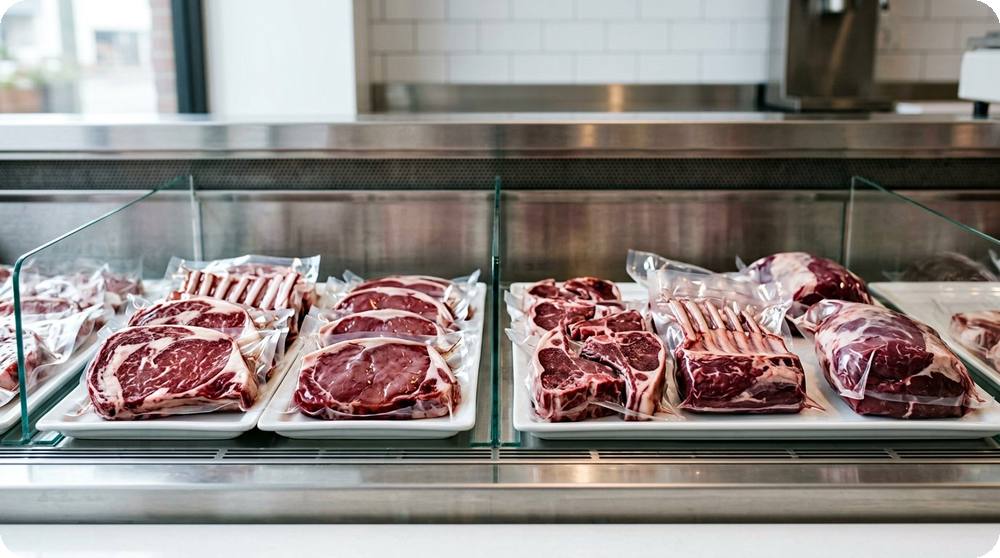
There is no single explanation for the difference between lighter and darker red meat.
Several factors can affect what you see:
- Species: Lamb, veal and beef do not necessarily have the same expected surface appearance.
- Cut and muscle: Different muscles can contain different amounts of myoglobin and have different biochemical characteristics.
- Oxygen exposure: Meat that has been exposed to air can look different from meat kept in low-oxygen packaging.
- Packaging and storage: Vacuum packaging, refrigeration, freezing and storage conditions can all influence appearance.
Myoglobin is an oxygen-binding protein in muscle and a major contributor to the visible color of red meat. Its chemical state changes with oxygen exposure and oxidation, which means a change in color does not automatically equal a change in food safety.
FactorPossible effect on appearanceWhat to checkMeat typeDifferent species may naturally show different shadesCompare like with likeCutDifferent muscles can vary in colorConfirm the cut orderedOxygenSurface color may change after exposure to airAvoid judging from one momentPackagingLow-oxygen packs can make meat appear darkerCheck package conditionFreezing/storageColor may change during storageFollow storage instructionsLightingChanges how the eye and camera perceive colorView under neutral light
What is a normal meat color?
There is no universal normal meat color that every cut should match.
USDA guidance describes different typical surface appearances for different meats—for example, beef, lamb and veal do not share one identical color reference. These descriptions are useful for understanding variation, but they should not be treated as a digital color swatch that every online order must reproduce exactly.
Part of the explanation is myoglobin.
When fresh meat is protected from air, including in some vacuum packages, myoglobin can produce a darker purplish-red appearance. Once the surface is exposed to oxygen, oxygenated myoglobin can make it appear brighter red.
That also explains why the outside and center of a cut may not look identical: they have not necessarily had the same exposure to oxygen.
So instead of asking, “What exact shade should fresh meat be?” consider:
- What type of meat is it?
- Which cut is it?
- How was it packaged?
- Are you looking at the surface or the interior?
- What lighting are you using?
- Was the product stored according to its instructions?
Together, these questions are more useful than looking for one “perfect” red.
Why can some meat look lighter?
A lighter appearance may be related to the species, the cut, muscle characteristics, myoglobin chemistry, packaging or the conditions under which the product is being viewed.
It should not automatically be translated into statements such as “lighter meat is lower quality” or “lighter meat always comes from a younger animal.” Those conclusions cannot reliably be made from color alone.
Different meat types
Myoglobin levels and muscle characteristics vary between meats, so some types naturally appear lighter than others. Official USDA guidance, for example, recognizes differences in the typical appearance of beef, lamb and veal.
Different cuts
Two cuts from the same general type of meat do not need to look identical.
Scientific reviews of meat color describe it as the result of multiple intrinsic and extrinsic factors, including myoglobin chemistry, muscle metabolism, oxygen conditions and oxidation.
Lighting and photography
A cut photographed in neutral daylight can look noticeably different under warm indoor lighting. A cool LED can shift its appearance again.
Phone displays also vary in white balance, brightness and color reproduction. For this reason, an online product photo should not be treated as a scientific reference for determining whether delivered meat is safe.
Why can meat look dark red?
Dark red meat is not automatically spoiled meat.
A darker color may be related to the state of myoglobin, oxygen exposure, the species, the muscle or the packaging system.
Fresh meat protected from contact with air can show a purplish-red appearance. After the package is opened and oxygen reaches the surface, the visible color may change as myoglobin becomes oxygenated.
Meat-color science is more complex than “bright red equals good and dark red equals bad.” Research shows that myoglobin redox chemistry, oxygen consumption, oxidation and postmortem muscle metabolism all contribute to visible color and color stability.
If a delivered cut looks darker than expected, check the product type, cut, package condition, storage information and delivery condition before drawing conclusions.
Does meat color indicate freshness or spoilage?
Color is useful visual information, but it should not be used by itself as a freshness or food-safety test.
USDA guidance specifically notes that a color change alone does not necessarily indicate spoilage. Spoilage can involve other changes, including an off odor or sticky, tacky or slimy surfaces, but consumers should still avoid trying to make a definitive food-safety diagnosis at home when they have genuine concerns.
A bright red appearance therefore does not guarantee safety, just as a darker appearance does not automatically prove spoilage.
Food-safety note: If you are unsure about a product, do not taste it as a way of testing whether it is safe. Official food-safety guidance warns against using taste to determine food safety.
Check the package and storage information and contact the retailer if you have concerns about the condition of your order.
Is lamb a different color from veal and beef?
Yes. Different types of red meat do not necessarily display the same color because their muscle and myoglobin characteristics differ.
The table below is not intended as a pass/fail color chart. It simply explains why comparing every type of meat to the same visual standard can be misleading.
Meat or format What to understand LambIts surface appearance may differ from veal or beef Veal Should not be expected to match lamb exactly Beef and steaks Surface and interior can differ with oxygen exposure Ground meat Its large exposed surface area and internal oxygen conditions create a different color pattern from whole cuts
Lamb color
Lamb is classified as red meat, and USDA descriptions of typical fresh surface color distinguish lamb from other meats such as veal. Still, the exact appearance of an individual cut can vary with the muscle, packaging and conditions under which it is viewed.
Veal and young beef cuts
When viewing a product such as local bone-in veal, do not assume that every delivered cut must reproduce the website photograph pixel for pixel.
Natural variation, packaging and lighting can all affect appearance.
Steak color
With steaks, the outside and inside may be especially useful for understanding oxygen-related color differences.
A product such as local tenderloin steak could be used for a controlled visual demonstration in which the whole steak and a freshly cut interior are photographed under exactly the same lighting.
That demonstration should document appearance only; it should not claim that color proves safety or freshness.
Ground meat color
Ground meat needs to be considered separately from a whole cut.
USDA notes that the interior of packaged ground beef may be grayish-brown because less oxygen reaches it, while the oxygen-exposed surface can appear redder. Therefore, a difference between the exterior and interior does not by itself establish that something is wrong with the product.
The same principle is useful when viewing ground meat or mixed boxes: different meat types and different areas of the package should not automatically be expected to display one identical shade. Review fresh meat boxes according to the actual product details.
Why can the surface and interior of meat look different?
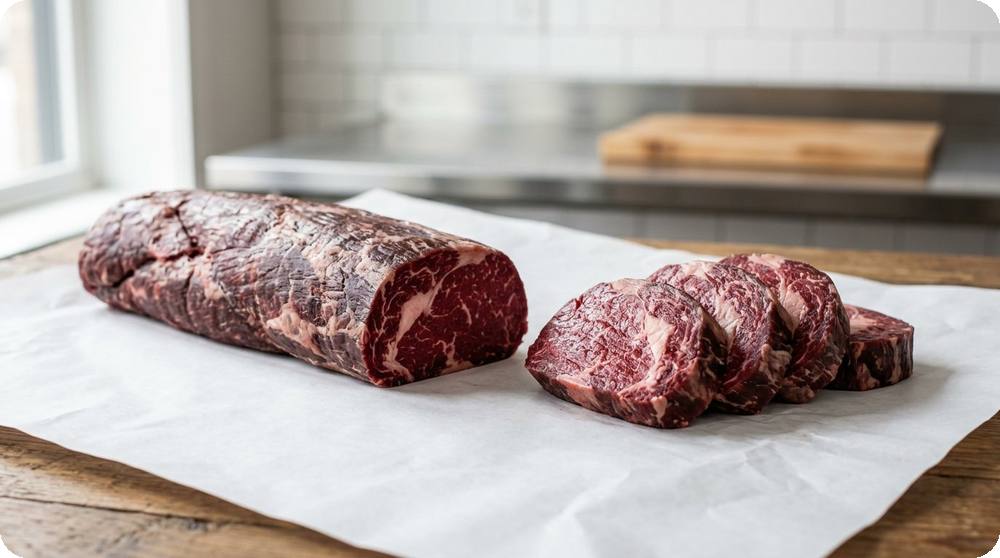
The outside surface is exposed to more oxygen than the center of an intact piece of meat.
As a result, the chemical state of myoglobin at the surface can differ from the myoglobin deeper inside the cut, creating a visible difference after slicing.
Ground beef provides a familiar example. USDA explains that an interior section can appear grayish-brown when oxygen exposure is limited, even while the outside looks redder.
The same concept can be demonstrated visually with a steak.
Can packaging and lighting change how meat color looks?
Yes.
This is particularly important when a customer compares an online product image with an item that has just been removed from its packaging.
Packaging
Low-oxygen conditions affect the chemical state of myoglobin. Fresh vacuum-packed meat can therefore have a darker purplish-red appearance before the surface has been exposed to air.
This is one reason why the color seen through a sealed package may not look identical to the color seen later.
Lighting
Warm lighting adds a yellow-orange cast, while cooler lights can shift the perceived color in the opposite direction.
Different phone screens can introduce another layer of variation.
When documenting a concern for customer service:
- Use daylight or neutral white light.
- Do not apply a filter.
- Avoid increasing saturation.
- Avoid strong direct flash.
- Include both a full-package photo and closer views of the meat.
Can refrigeration or freezing change meat color?
The appearance of meat can change during freezing and storage, so a color change should not automatically be treated as a stand-alone spoilage diagnosis.
USDA notes that frozen meat may become darker or paler brown depending on the product and storage conditions, with factors including reduced oxygen exposure, freezer burn and unusually long storage.
Packaging and correct storage therefore matter for both appearance and quality.
Saudi Food and Drug Authority guidance also emphasizes safe meat storage and recommends thawing frozen foods under refrigeration rather than simply leaving them at room temperature.
For a full storage guide, add the dedicated internal article here:
For the distinction between product states:
Suggested Internal Hummmy Yummmy Photo Test
Hummmy Yummmy can later create an internal photo test for the same cut at different stages: inside the package, after opening, and after slicing. No observation should be published unless the photos are actually taken under fixed neutral lighting and the product name, packaging format, and handling conditions are documented. This would be a visual demonstration, not a laboratory safety test.
- Inside its sealed package.
- Immediately after opening.
- After a predefined period approved by the quality team.
- After slicing the cut to reveal its interior.
This is a visual demonstration, not a microbiological test or a food-safety determination.
- Exact product name.
- Meat type.
- Photography date.
- Packaging format.
- Time of each photograph.
- Lighting setup.
- Storage and handling conditions.
- Quality manager's comment.
What should you do if your meat arrives in a different color than expected?
If a delivered order looks lighter or darker than you expected, do not make a decision from the product photo or shade of red alone.
Instead:
- Confirm the product name and cut.
- Check the package for any obvious issue with the seal or condition.
- Review the storage instructions supplied with the product.
- Consider the delivery condition and whether the product arrived as specified.
- View the meat under neutral or natural light.
- Photograph the package and product clearly if you need assistance.
- Keep the order information available for the customer-service team.
- Contact Hummmy Yummmy customer service if you are unsure about the product.
If you have a genuine food-safety concern, do not taste the meat in an attempt to test its safety.
How should you photograph meat for customer service?
Clear, neutral images make it easier for the customer-service and quality teams to understand what you are seeing.
Photograph:
- The complete package.
- The product label.
- The seal or closure.
- The meat from above.
- The meat from the side.
- A closer view of the area you are asking about.
- At least one image in natural or neutral light.
- A short video if movement or another visual detail cannot be shown clearly in a still image.
Do not apply a filter or change saturation, warmth or white balance after taking the photograph.
Send your order number in the customer-service message rather than placing private order information inside a photograph that may later be shared internally.
Before judging meat by its color
- Identify the meat type and cut.
- Confirm that the correct product was delivered.
- Inspect the package condition.
- View the meat under natural or neutral light.
- Review the storage and delivery instructions.
- Do not compare two different meat types as if they should look identical.
- Do not use color alone to determine quality or safety.
- Do not taste the product to test whether it is safe.
- Photograph the product and package clearly if assistance is needed.
- Contact the retailer whenever you have a genuine concern.
To reduce uncertainty before ordering, start with a trusted source and review Hummmy Yummmy products by meat type and cut, then treat color as one clue rather than a final judgment.