
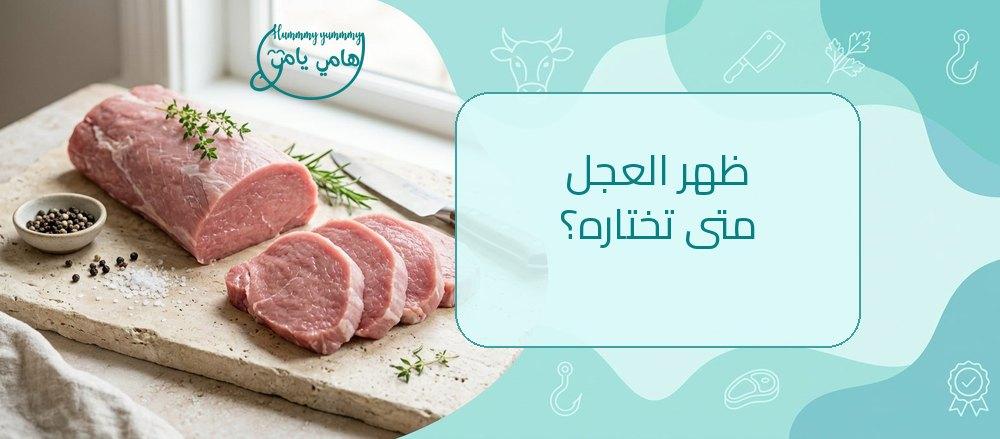
Paid for veal loin and ended up with a dry cut? The problem is often not the meat quality. It is usually a cooking method that does not fit the cut. Veal loin is best for fast grilling, steak, and pan searing, not kabsa, boiling, or long slow cooking.
Veal loin requires a clear decision before buying. If your dish uses quick heat and sliced serving, it may be the right choice. If you need a rich broth or meat that softens over long cooking, choosing loin can be an expensive mismatch.
“If your dish is kabsa or long boiling, veal loin is not the smart starting point.”
Where Is Veal Loin Located?
Veal loin is located along the upper back area, close to cuts commonly used for steaks and slices. It is not worked like the leg or shoulder, which is why it should be treated differently from long-cooking cuts.
Do not automatically equate local veal loin with Australian Angus beef back meat. That is an imported beef product with a different character, not a silent replacement for every local veal use.

What Works and What Ruins It?
Veal loin works when you want a cut cooked quickly and served as a steak or slice. It fits fast grilling, pan searing, and controlled high-heat preparation that does not leave the meat in liquid for a long time.
It is usually ruined by using it in kabsa, boiling, or long simmering. Those dishes need cuts that can handle time and moisture, while loin can lose moisture and become dry when treated like broth meat.
Why Does Veal Loin Dry Out?
Reason one: long slow cooking that does not match the cut.
Reason two: slices that are too thin and overcook before a good sear forms.
Reason three: slicing with the grain after cooking, which makes chewing harder. When possible, slice against the grain.
Veal Loin vs Ribs vs Round
Do not compare loin, ribs, and round by price or reputation alone. Loin serves fast steak-style cooking, ribs suit bone-in grilling, and round may be broader for everyday cooking or slices depending on cutting.
| Comparison | Veal Loin | Ribs | Round |
| Best use | Fast grilling, steak, pan searing | Bone-in grilling and individual serving | Slices or everyday cooking depending on cut |
| When not to choose | Kabsa, boiling, long slow cooking | When you need boneless meat | When you want a high-tenderness steak experience |
When Should You Not Buy Veal Loin?
Do not buy it for kabsa, broth, boiling, or long slow cooking. A premium cut used in the wrong dish can turn into a dry or disappointing result.
If you want a practical option for some daily uses or slices, review local veal round steak. For a broader steak comparison, review Hummmy Yummmy’s steak types guide.

How to Order It from Hummmy Yummmy
If you want high tenderness without bone: compare local veal tenderloin steak with your serving plan.
If you want bone-in steak: review fresh T-bone veal steak for a different presentation.
If you want imported beef back meat: treat Angus as a separate product, not an automatic replacement for local veal.
Quick Test Before Buying
Steak or fast grilling? Veal loin may fit.
Kabsa or long boiling? Do not start with loin.
Want bone flavor? Compare ribs or T-bone.
Need quantity and budget flexibility? Round or cooking cuts may be closer to your need.

Frequently Asked Questions
What dishes is veal loin best for?
It is best for steak, fast grilling, and pan searing.
Why does veal loin dry out?
It dries out when cooked too long, sliced too thin, or used in liquid-based slow dishes.
Veal loin or tenderloin?
Tenderloin focuses on high tenderness, while loin should be matched to the cut and serving style.
Veal loin or round?
Loin is closer to fast steak-style cooking; round can be broader for daily cooking depending on cutting.
Final Decision
Choose veal loin when you want steak or fast grilling. Avoid it when the dish is broth, kabsa, or long slow cooking. The right decision starts with the dish, serving style, and heat control, not with the cut name alone.