
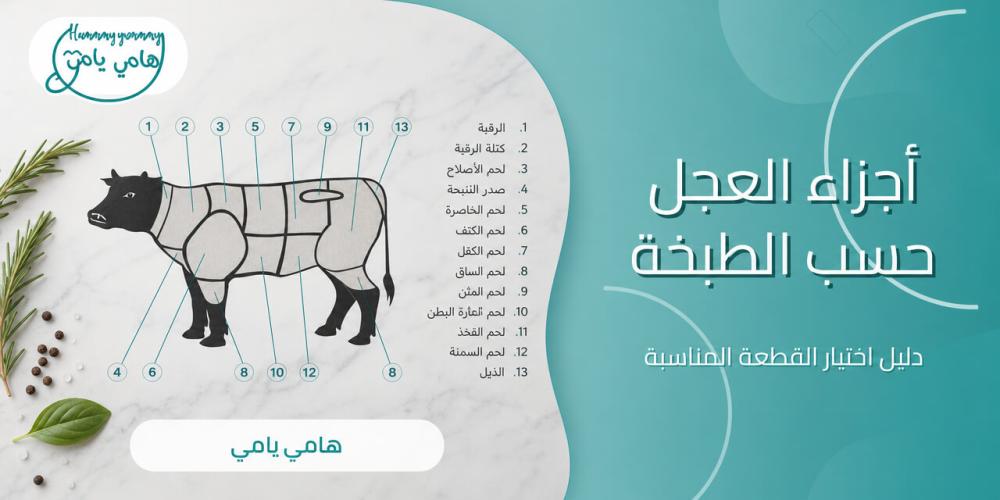
If your first question to the butcher is “Give me the best cut”, you may be leaving the most important buying decision to guesswork. Meat quality matters, but choosing the right veal cut for the dish is what separates a successful meal from one that does not deliver the texture or flavor you expected.
Veal cuts are not just names to memorize. They are a decision map: back and ribs can suit quick grilling when prepared correctly, shoulder, breast, and shank are better for slower cooking and broth, neck can support soups, and leg cuts may work for slices or home-style steak depending on cutting.
“The most expensive cut is not always the best cut. It is the best cut for one specific dish.”
Before Choosing a Cut: Three Questions Decide the Order
1. What are you cooking? Grilling, broth, kabsa, steak, and everyday cooking do not need the same cut. Start with the dish before the name.
2. How much time do you have? A quick meal should not start with a cut that needs slow cooking. A patient stew or broth can benefit from cuts that develop texture and depth over time.
3. Bone-in or boneless? Bone-in cuts can suit broth and traditional dishes, while boneless cuts are usually easier to portion and serve. Review bone-in veal or boneless veal according to your cooking plan.
Veal Cuts Map: From Head to Shank
Cut names may vary between butchers and regions. The goal is not only to memorize names, but to understand where the cut comes from and what it is usually used for. This article focuses on decision-making, while the detailed naming guide can be reviewed separately.

Head: usually belongs to specific traditional preparations and is not a general-purpose choice.
Neck: useful for soups, broth, and recipes that need stronger cooking flavor, not quick grilling.
Back / loin: can work for slices, some grilling uses, or home steak depending on cutting.
Ribs: suitable for grilling or recipes where cooking near the bone is part of the experience.
Shoulder: practical for everyday cooking, kabsa-style dishes, and slow-cooked meals.
Breast: suitable for broth and recipes that need time.
Belly / Fi: a local term that should be confirmed by use case.
Leg: versatile for slices and some home steak uses, depending on preparation.
Qanlo, Daqi, and shank: butcher terms that need clarification from the shop. Explain the dish before choosing.
Veal Cut Decision Table
The right question is not: “What is the best veal cut?” The better question is: “What is the best veal cut for this exact dish?”
| Dish | Better starting cut | When not to choose it |
| Quick grilling | Back/loin, ribs, or a cut prepared for grilling | When you need broth or slow cooking |
| Broth and soup | Neck, breast, or shank | When you need steak slices |
| Kabsa or everyday cooking | Shoulder, breast, or suitable cooking cuts | When you want direct grilling or steak |
| Home steak | Suitable back or leg cuts depending on slicing | When the cut is intended for broth or slow cooking |
Butcher Terms: Majooza, Qanlo, Daqi, and Fi
One reason customers get confused is that butcher terms can differ. You may recognize a name without knowing exactly where it comes from or how to cook it. The safer approach is to connect the name with the dish.
Majooza: may refer to parts around the leg area depending on the cutting system. Ask whether it suits slices or everyday cooking.
Qanlo: a term that can vary. Instead of asking by name only, say whether you need broth meat or everyday cooking meat.
Daqi: another term that depends on the shop’s cutting method. State the recipe before choosing.
Fi: if the meaning is unclear, ask: what dish is this cut best used for?
Veal or Older Beef?
Do not choose the category before defining the dish. Some customers associate veal with softness, but that alone is not a complete buying rule. Cut, preparation, and cooking method matter more than the name by itself.
Review Hummmy Yummmy’s veal and beef category and choose the product by dish, not by name alone.

The Most Expensive Cut Is Not Always the Best
A premium grilling cut may not be the right choice for broth, and a slow-cooking cut will not behave like a steak. A smart buying decision starts with the result you want, then selects the cut that serves that result.
If you want a rich broth, neck, breast, or shank may be more relevant than a cut intended for quick grilling. If you want fast slices, start with cuts suited to slicing and direct heat.
How to Order Veal from Hummmy Yummmy Without Confusion
Start with the dish: kabsa, grilling, steak, broth, or everyday cooking.
Choose the preparation style: bone-in, boneless, cubes, slices, or a whole piece.
Do not rely only on names: if you do not know the exact cut, say: I need a cut for kabsa or I need a cut for steak.
Keep the first order simple: choose a clear purpose first, then explore more cuts later.
Quick Test: Choose by Dish
Want grilling? Start with back, ribs, or a cut prepared for grilling.
Want broth? Consider neck, breast, or shank.
Want kabsa? Choose shoulder or suitable cooking cuts.
Want steak? Focus on cuts that can be prepared into suitable slices.

Quick Rule: Bone-In or Boneless?
Choose bone-in when broth, traditional flavor, or bone-in presentation matters.
Choose boneless when you want easier preparation, cutting, and serving.
There is no permanently correct choice. There is only the choice that fits your recipe.
Frequently Asked Questions About Veal Cuts
What are the main veal cuts?
They include areas such as back, ribs, neck, shoulder, breast, leg, and shank, with different uses depending on cooking method.
Which veal cut is best for grilling?
It depends on the grilling method and preparation. Suitable back and rib cuts are common starting points.
Which veal cut is best for broth?
Neck, breast, and shank are useful when the goal is a rich cooking flavor.
Is the most expensive cut always best?
No. The best cut is the one that matches the recipe.
Final Decision Before Buying
Do not start with the cut name. Start with the dish. Grilling, broth, steak, and kabsa need different choices. The most expensive cut is not always the most useful, and local butcher names should always be tied to the cooking purpose.