

How can you tell whether the meat you are about to buy is actually fresh?
The answer is not as simple as looking for the brightest red package. Freshness should be assessed using several clues together: appearance, odor, texture, packaging condition, labeling, refrigeration, and how the product has been handled.
Quick answer: Fresh meat should not be judged by color alone. Check packaging, odor, texture, refrigeration, dates, and seller reliability together. Normal color varies by meat type and packaging, while bad odor, a sticky or slimy surface, damaged packaging, or poor refrigeration are warning signs.
There is also an important difference between meat quality and food safety. Your senses can help identify some signs of spoilage, but harmful bacteria may be present without causing an obvious change in smell, taste, or appearance. Proper refrigeration and safe handling are therefore just as important as what the meat looks like.
Whether you are buying meat for everyday meals, grilling, or a large family gathering, the following guide will help you make a more informed decision before purchasing.
Quick Guide: What Should Fresh Meat Look Like?
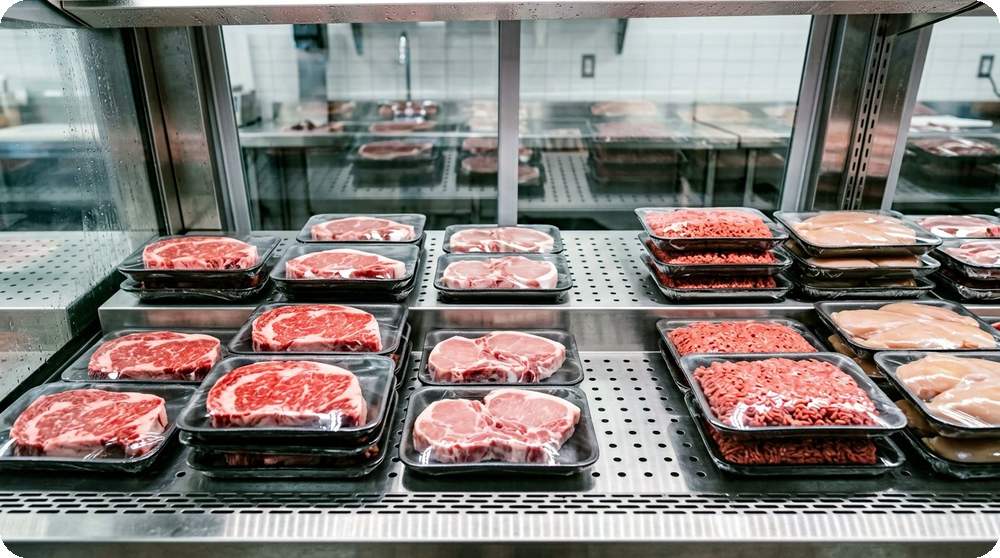
Use this checklist as a starting point:
| What to Check | What to Look For |
| Appearance | A natural appearance appropriate for the type of meat and packaging |
| Odor | No strong, unpleasant, or unusual smell |
| Texture | No obvious sticky, tacky, or slimy surface |
| Packaging | Intact, properly sealed, and free from obvious damage |
| Refrigeration | Properly chilled or frozen |
| Label | Appropriate date and clear storage instructions |
| Seller | A reliable source with good product-handling practices |
The key is simple:
Never judge meat by one sign alone.
1. Does Fresh Meat Have to Be Bright Red?
Color is often the first feature shoppers notice, but it is also one of the most misunderstood indicators of freshness.
Many consumers assume that bright red meat must be fresher than darker meat. In reality, meat color is affected by several factors, including oxygen exposure, packaging method, and natural changes in meat pigments.
The USDA explains that a change in color alone does not necessarily mean meat has spoiled. Fresh meat can naturally change color during storage. Color becomes more concerning when it appears together with other spoilage signs such as an unpleasant odor or a sticky or slimy texture.
Why Does Meat Change Color?
Meat contains a pigment called myoglobin. Its appearance changes depending on its interaction with oxygen.
That means meat stored in vacuum packaging may look different from meat exposed to air in a display case.
Instead of asking only:
“Is the meat bright red?”
ask:
“Does this meat look normal for its type and packaging, and are there any other warning signs?”
Does Brown Meat Mean It Is Spoiled?
Not necessarily.
Some browning or darkening can occur naturally as meat pigments change over time. Color alone is therefore not a reliable reason to declare meat spoiled.
However, if discoloration occurs together with an off odor, a sticky surface, slime, damaged packaging, or questionable storage conditions, the product should not be used.
2. Check the Smell
Odor can provide an important warning that meat has begun to spoil.
A noticeably sour, unpleasant, or abnormal odor should not be ignored, particularly when it appears together with changes in texture or appearance.
However, smell has an important limitation:
Meat that smells normal is not automatically safe.
Disease-causing bacteria may be present without making food smell, look, or taste spoiled. The FDA specifically warns that food can cause illness even when it does not appear spoiled.
Think of odor as one piece of evidence rather than a complete safety test.
If the meat smells clearly wrong, do not taste it to “check” whether it is still usable.
3. Look at the Texture
Different cuts of meat naturally have different textures depending on muscle structure, fat content, cutting method, and processing.
For that reason, there is no single texture that all fresh meat must have.
There are, however, clear warning signs worth noticing.
Be cautious if meat develops:
- An obviously sticky surface.
- A tacky coating.
- A slimy or mucus-like texture.
- An abnormal texture combined with a bad odor.
USDA guidance lists sticky, tacky, or slimy texture among the signs that may accompany spoiled meat.
This is different from tenderness.
A tender steak and a firmer cooking cut may both be perfectly good products. Tenderness depends largely on the cut and intended cooking method, so it should not be used as a universal freshness test.
4. Inspect the Packaging Carefully
When buying packaged meat, inspect more than the meat itself.
The packaging protects the product throughout storage, display, and transport.
Before purchasing, look for:
- Tears or holes.
- Broken seals.
- Leakage.
- Packaging that appears to have been opened.
- Unusual damage.
- Missing or unclear label information.
The FDA advises consumers not to purchase food products when packaging is open, torn, or damaged, including products kept in refrigerated or frozen sections.
If two packages contain similar products and one has a questionable seal, choosing the intact package is the safer and simpler decision.
Does Liquid Inside the Meat Package Mean It Is Bad?
Not automatically.
Meat can release some fluid during storage, particularly depending on how it has been cut and packaged.
Instead of treating any liquid as proof of spoilage, evaluate it together with the rest of the product.
Check:
Packaging integrity + odor + appearance + storage temperature + product date.
Leakage outside the package or damaged seals should be treated differently from a small amount of fluid inside an otherwise properly sealed package.
5. Check How the Meat Is Stored
Freshness is not only about how meat looks.
Temperature control is one of the most important parts of meat quality and food safety.
The Saudi Food and Drug Authority advises that meat kept under refrigeration should be stored at no more than 5°C, while frozen meat should be maintained at -18°C or below.
The FDA similarly recommends keeping household refrigerators at 4°C/40°F or below.
When buying meat, therefore, consider whether:
- The product is clearly being kept refrigerated or frozen.
- The refrigerated display is operating properly.
- The meat appears to have been left outside refrigeration.
- A frozen product shows possible signs of thawing and refreezing.
- The cold chain can be maintained during delivery or transport home.
A good-looking piece of meat can still lose quality when handled poorly.
6. Check the Date and Storage Instructions
Product dates are important, but they should not be considered independently from storage conditions.
Before purchasing packaged meat, check:
- The displayed date.
- Storage instructions.
- Whether the product is intended to be chilled or frozen.
- Whether the packaging remains intact.
- The overall condition of the product.
FDA consumer guidance recommends examining dates and avoiding food products that are damaged or appear unusual.
A date printed on a package cannot compensate for poor refrigeration.
In other words:
Date + temperature + packaging + handling all matter.
7. Why the Seller Matters
Many important aspects of meat handling happen before the product reaches the display case.
A reliable meat supplier or retailer should manage factors such as:
- Receiving temperatures.
- Refrigeration.
- Stock rotation.
- Clean processing areas.
- Packaging.
- Product identification.
- Safe transportation.
As a consumer, you cannot directly inspect every stage of that process.
This is why the reputation and handling practices of the seller matter alongside the appearance of the individual cut.
The more transparent the product information and the better the storage and packaging conditions, the less you have to rely on guesswork.
8. Fresh vs. Frozen Meat: Is Fresh Always Better?
Not necessarily.
“Fresh” and “frozen” describe the product's storage condition. They do not automatically tell you which product will perform better in every recipe.
Properly frozen meat can maintain excellent quality, while chilled meat can deteriorate if storage conditions are poor.
USDA guidance notes that the quality of food at the time it is frozen affects its condition after thawing. Products frozen at a high level of quality generally retain better quality than products frozen near the end of their useful life.
When comparing fresh and frozen meat, consider:
- Initial meat quality.
- Packaging.
- Storage temperature.
- Freezing method.
- Thawing method.
- The recipe you are preparing.
The better question is not simply:
“Fresh or frozen?”
It is:
“Which product has been handled properly and best suits the way I plan to cook it?”
9. Meat Quality and Meat Safety Are Not the Same Thing
Understanding this distinction can improve the way you buy meat.
Meat quality can include:
- Appearance.
- Tenderness.
- Fat distribution.
- Cut.
- Flavor potential.
- Suitability for a particular cooking method.
Meat safety depends on factors such as:
- Temperature control.
- Hygienic handling.
- Avoiding cross-contamination.
- Proper cooking.
- Safe refrigeration and storage.
A piece of meat can look perfectly normal while still requiring proper handling and cooking.
The FDA notes that pathogenic bacteria can be present even when food does not look, smell, or taste spoiled.
A useful rule is:
Use your senses to evaluate visible quality, but rely on proper handling and temperature control for food safety.
10. Common Mistakes When Buying Meat
Choosing Meat Based Only on Bright Red Color
Bright red meat is not automatically the freshest option.
Packaging and oxygen exposure can influence meat color, and color changes can occur naturally.
Ignoring Damaged Packaging
Good-looking meat inside an open or damaged package is not worth the risk.
Choose an intact package instead.
Leaving Meat in the Car After Shopping
Proper handling continues after the purchase.
Perishable foods should return to refrigeration promptly rather than being left for extended periods in warm conditions.
Assuming Smell Can Detect Every Problem
Smell helps detect spoilage, but harmful bacteria cannot always be seen or smelled.
Buying the “Best” Cut Without Considering the Recipe
Quality and suitability are different.
A premium grilling cut may not be the most practical choice for a slow-cooked dish. Likewise, a cut designed for long cooking may not deliver the texture you expect from a quickly grilled steak.
Once freshness and quality are checked, the next step should always be:
Choose the cut according to the cooking method.
This is an ideal place for an internal link to a guide to choosing the right meat cut.
A Simple Meat-Buying Decision Map
Use the following process every time you buy meat.
Step 1: Start With the Source
Choose a retailer or supplier you trust.
Step 2: Check Refrigeration
Make sure the product is properly chilled or frozen.
Step 3: Inspect the Package
Avoid torn, leaking, open, or damaged packages.
Step 4: Read the Label
Check product dates and storage instructions.
Step 5: Look at the Meat
Look for a normal appearance, but do not rely on color alone.
Step 6: Watch for Spoilage Signs
Avoid meat with an abnormal odor or a clearly sticky or slimy surface.
Step 7: Choose the Right Cut
Once the product passes your quality checks, choose a cut suitable for grilling, slow cooking, stews, rice dishes, or your preferred recipe.
How Should You Store Meat After Buying It?
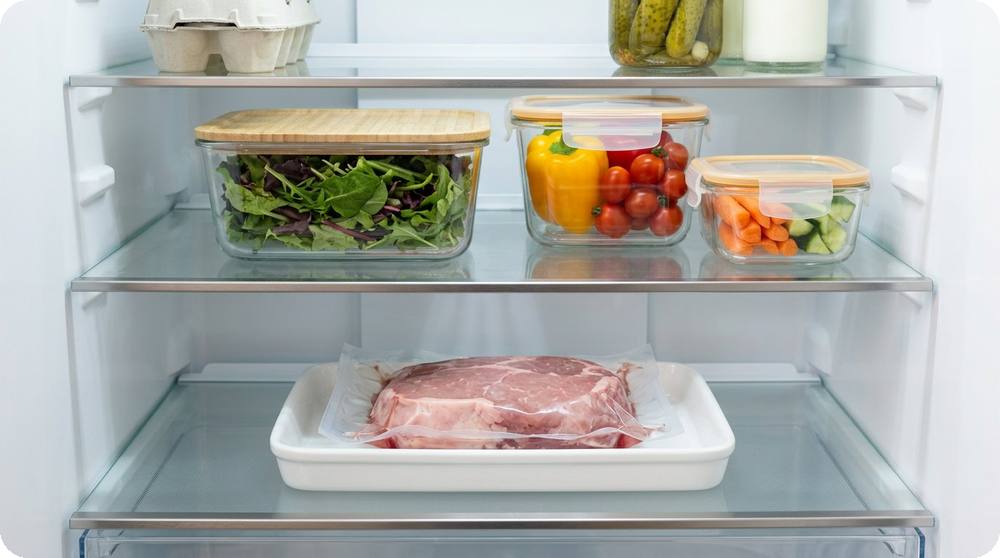
Choosing quality meat is only half the job.
Once the meat arrives home:
- Refrigerate it promptly.
- Prevent raw meat juices from contacting ready-to-eat food.
- Keep the meat covered or properly sealed.
- Follow the storage instructions on the product.
- Freeze portions you do not plan to use soon, where appropriate.
The Saudi Food and Drug Authority recommends keeping meat in properly closed containers during refrigeration to reduce the risk of juices contaminating other foods.
Raw meat should also be kept separate from ready-to-eat foods to reduce cross-contamination.
An internal link to a meat refrigeration and freezing guide can be added here.
How Long Can Fresh Meat Stay in the Refrigerator?
Storage time depends on the type of meat, packaging, product instructions, and refrigerator temperature.
As a general reference, FoodSafety.gov lists fresh beef, veal, lamb, and pork steaks, chops, and roasts at approximately 3 to 5 days in a refrigerator maintained at 4°C/40°F or below.
Ground meat has a shorter recommended refrigerated storage time of approximately 1 to 2 days.
Always follow specific product instructions when they are available rather than replacing them with general guidelines.
Fresh Meat Checklist Before You Buy
Before checking out, ask:
- Is the seller reliable?
- Is the meat properly refrigerated?
- Is the packaging completely intact?
- Is the product date appropriate?
- Are storage instructions clear?
- Does the meat have a normal appearance?
- Is there an unusual odor?
- Is the surface obviously sticky or slimy?
- Is this the right cut for my recipe?
- Can I keep it properly chilled on the way home?
This turns meat buying from a color-based guess into a much more informed decision.
Frequently Asked Questions
How can you tell if meat is fresh?
Check several factors together: appearance, odor, texture, packaging, labeling, refrigeration, and the reliability of the seller. Color alone is not enough.
What color should fresh meat be?
Normal meat color varies according to the species, cut, oxygen exposure, and packaging method. Bright red is therefore not a universal freshness standard.
Does brown meat mean it has gone bad?
Not necessarily. Meat can naturally darken or become brown due to changes in pigments and oxygen exposure. Look for additional signs such as bad odor, slime, or questionable storage conditions.
What are common signs of spoiled meat?
An unpleasant odor and a sticky, tacky, or slimy surface can be signs of spoilage, particularly when several changes appear together.
Can you tell if meat is safe just by smelling it?
No. Some foodborne pathogens do not change the smell, appearance, or taste of food. Safe refrigeration, handling, and cooking remain essential.
Is frozen meat lower quality than fresh meat?
Not automatically. Frozen meat quality depends on the original quality of the product and how it was frozen, stored, and thawed.
What is the most important thing to check when buying meat?
There is no single indicator. The strongest buying decision combines a reliable source, proper refrigeration, intact packaging, clear product information, and normal appearance, odor, and texture.
Final Takeaway: Do Not Judge Fresh Meat by Color Alone
Learning how to tell if meat is fresh does not require professional butchery experience.
You simply need to know which clues matter.
Check the packaging, storage conditions, dates, appearance, odor, and texture. Buy from a source you trust, and remember that visible freshness and food safety are related but not identical.
Once you are confident in the quality of the product, choose the cut that best matches the dish you plan to prepare.
The best meat purchase is not simply the reddest package in the display. It is the right cut, from a reliable source, handled and stored under appropriate conditions.
At Hummmy Yummmy, the next step is to move from understanding meat quality to choosing the right product and cut for your meal.
After checking the quality signs, compare Hummmy Yummmy products and choose the cut that fits your dish, whether from lamb, veal and beef, or meat boxes